

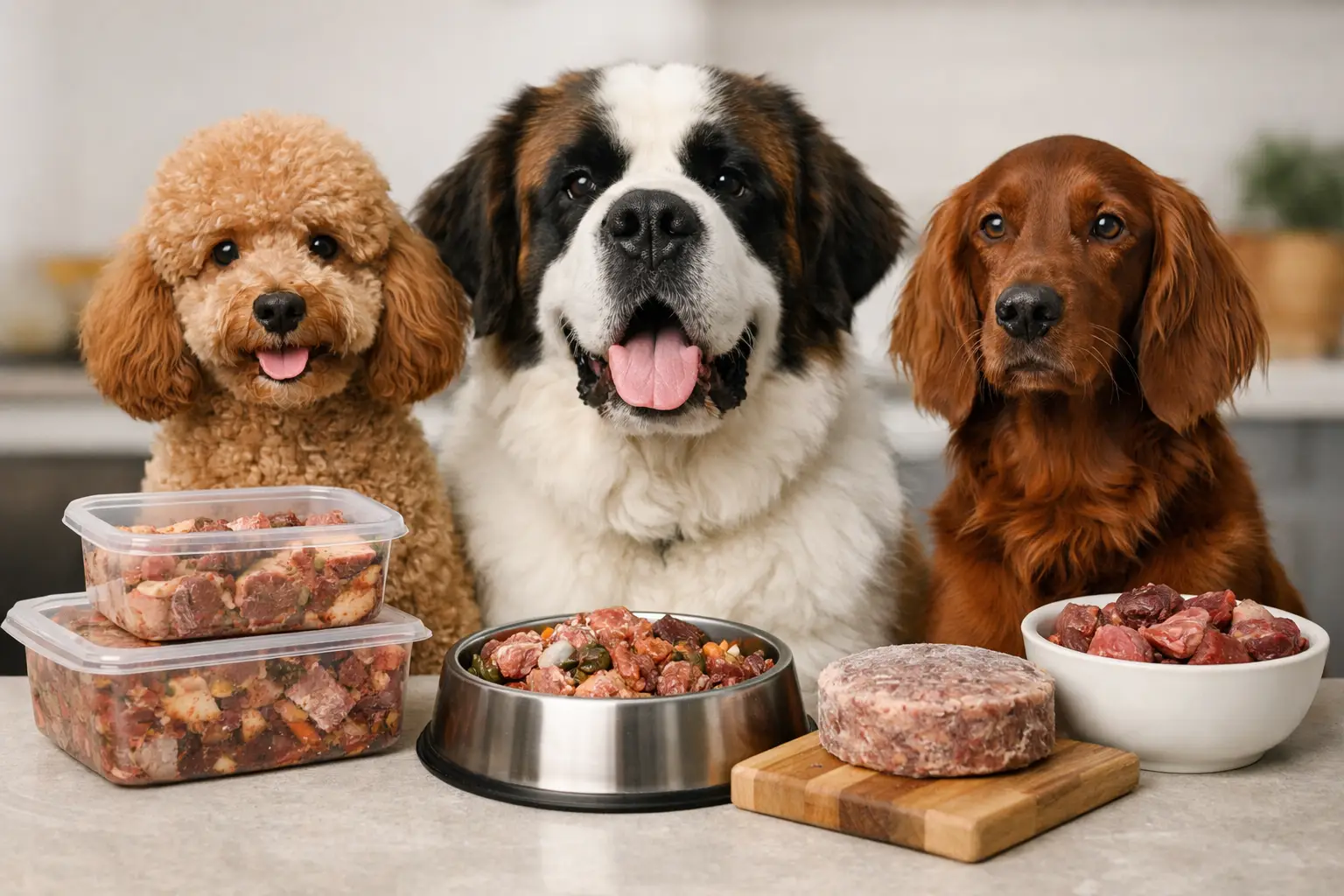
A premade raw dog food review should answer more than one question: Does the food sound healthy? The real question is whether it is a complete, responsibly prepared meal you can feed consistently, store safely, and afford over time. A pretty package and a long ingredient list are not enough when your dog depends on that bowl every day.
For many families, premade raw food removes the measuring, grinding, supplement math, and freezer guesswork that make DIY raw feeding hard to sustain. That convenience has value. But ready-to-eat raw meals vary widely in nutritional formulation, ingredient quality, sourcing, portioning, and handling standards. Here is how to look past the marketing and make a sound choice for your dog.
What a Premade Raw Dog Food Review Should Examine
The best review is not simply a list of flavors or a claim that one food is better than another. It looks at the full feeding system: what is in the meal, how it is balanced, how it arrives, what it costs to feed, and whether the company gives customers clear instructions.
Raw feeding is not automatically right for every dog or every household. Puppies, senior dogs, dogs with pancreatitis, kidney disease, immune conditions, food allergies, or other medical concerns may need a specific nutritional plan. Talk with your veterinarian before changing diets, especially if your dog has a diagnosis or takes medication.
For a healthy adult dog, the goal is still straightforward: a food that provides appropriate nutrition, is handled safely, agrees with your dog, and fits the routine you can keep.
Start With Whether the Food Is Complete and Balanced
This is the first thing to verify. A meal built around meat, organs, and bone may look like a natural canine diet, but those ingredients alone do not guarantee reliable nutrition. Dogs need appropriate levels of protein, fat, essential fatty acids, vitamins, minerals, and calories. They also need those nutrients in the right relationship to one another.
Look for a clear statement that the food is complete and balanced for your dog’s life stage, along with information about how that formulation is established. If a product is intended only for supplemental feeding, rotation, or occasional use, it should not be treated as a full-time diet without guidance.
Transparency matters here. Responsible producers should be able to explain what goes into a recipe and why. A vague description like “ancestral nutrition” does not tell you whether the meal meets your dog’s daily needs. Neither does an ingredient panel that hides behind broad terms without identifying the animal proteins used.
Ingredients Should Be Recognizable and Traceable
Human-grade, locally sourced ingredients can be meaningful when those claims are backed by clear sourcing and careful production. Quality begins with the proteins, organs, produce, and supplements used in the recipe, but it also includes how those ingredients are stored and processed before they reach your freezer.
A strong premade raw meal identifies its primary proteins and does not make you guess what “meat” or “animal fat” means. Organ meats should be present in intentional amounts, not added as a marketing flourish. Bone or a verified calcium source is also important, because calcium and phosphorus balance is not something to leave to chance.
Ingredient simplicity can be helpful for dogs with suspected sensitivities, but simple does not always mean complete. On the other hand, an extremely long list is not automatically better. What you want is a recipe with a clear purpose, known ingredients, and a nutritional structure that makes sense.
Safety Is Part of Food Quality
Raw food requires responsible handling from the producer and the customer. That is not a reason to ignore raw feeding, but it is a reason to take it seriously. Refrigeration, frozen storage, clean equipment, dependable pickup or delivery timing, and clear thawing directions all protect food quality.
Before buying, find out how the meals are packaged and kept frozen. Ask what happens if a delivery is delayed, how long food can remain refrigerated after thawing, and whether containers are clearly labeled with the recipe and handling instructions. A company that is disciplined about its logistics is usually easier to trust than one that treats delivery as an afterthought.
At home, keep raw meals frozen until you need them. Thaw them in the refrigerator, serve portions in a clean bowl, wash hands and food-contact surfaces afterward, and discard leftovers that have sat out too long. Households with very young children, older adults, pregnant people, or immune-compromised family members should discuss raw feeding practices with a healthcare professional and veterinarian before proceeding.
The Real Cost Is the Cost Per Day
A low price per container can be misleading. A high-calorie, nutrient-dense food may cost less per day than a cheaper-looking meal that requires a larger serving. The useful comparison is your dog’s daily feeding cost, not just the price on a product page.
Start with your dog’s weight, age, activity level, body condition, and the food’s feeding guidance. Then calculate how many pounds or containers you will need each month. Watch your dog’s body condition after the transition, because every feeding chart is a starting point, not a permanent prescription.
Premade raw can cost more upfront than many conventional kibble options. That trade-off is real. But for owners who value ingredient quality and visible condition changes such as steady energy, a healthy coat, firmer stools, and better dental cleanliness, the expense may feel justified. The key is choosing a plan you can maintain rather than buying premium food for two months and then starting over with something entirely different.
Reusable container programs and coordinated group delivery can make a practical difference. Reducing single-use packaging and combining regional pickup routes can help keep costs down without asking families to compromise on fresh, carefully made food. Chew Dat Foods uses this kind of planned pickup and container-return model because affordability is part of making better nutrition sustainable.
Convenience Depends on Your Routine
Premade raw food is convenient compared with making balanced meals yourself, but it is not as thoughtless as pouring kibble into a bowl. You need freezer space, a thawing routine, and enough food on hand to avoid last-minute scrambling.
That is why scheduled ordering matters. If your provider works through co-op-style pickup locations or set delivery days, place orders before the deadline and know where you will store the food when it arrives. This model can preserve freshness and reduce costs, but it asks customers to plan ahead. For many households, that is a fair exchange. For someone who travels constantly or has no freezer capacity, it may not be the best fit.
In service areas across Tennessee, Virginia, Maryland, and nearby communities, regional pickup can be especially useful when it gives customers access to fresh raw meals without retail-store markups. The benefit comes from coordination, not instant convenience. Treat pickup times and container returns as part of the feeding commitment.
Watch Your Dog, Not Just the Label
A food can have excellent ingredients and still not be the best match for your individual dog. After a gradual transition, pay attention to stool quality, appetite, coat condition, energy, itching, ear irritation, weight, and overall comfort. One unusual stool during a diet change is not necessarily a problem. Ongoing digestive upset, unexplained weight change, or persistent skin issues deserves a conversation with your veterinarian.
Transition slowly, particularly if your dog has eaten kibble for years. Begin by replacing a small portion of the current food with the new meal, then increase the raw portion over several days as your dog tolerates it. Some dogs transition faster than others. There is no prize for rushing.
Avoid changing proteins, treats, supplements, and the main diet all at once. If your dog reacts poorly, you will have no clear way to identify what caused the issue. A simple feeding log during the first few weeks can help you spot patterns and adjust serving sizes responsibly.
Questions Worth Asking Before You Order
Ask whether the food is complete and balanced for your dog’s life stage, what proteins and organs are used, how ingredients are sourced, and how the meals are stored before pickup. Ask for feeding guidance, safe thawing instructions, and a clear explanation of ordering deadlines. If you cannot get direct answers, keep looking.
The right food company should not pressure you with dramatic claims or pretend that every dog needs the same diet. Good nutrition requires both quality food and responsible ownership. That means accurate portions, safe handling, patience during transition, and a willingness to adjust based on your dog’s condition.
A worthwhile raw food choice is one you can understand, trust, and keep feeding with confidence. Start with the details, make room in the freezer, and let your dog’s day-to-day health help guide the decision.
Leave a Reply