

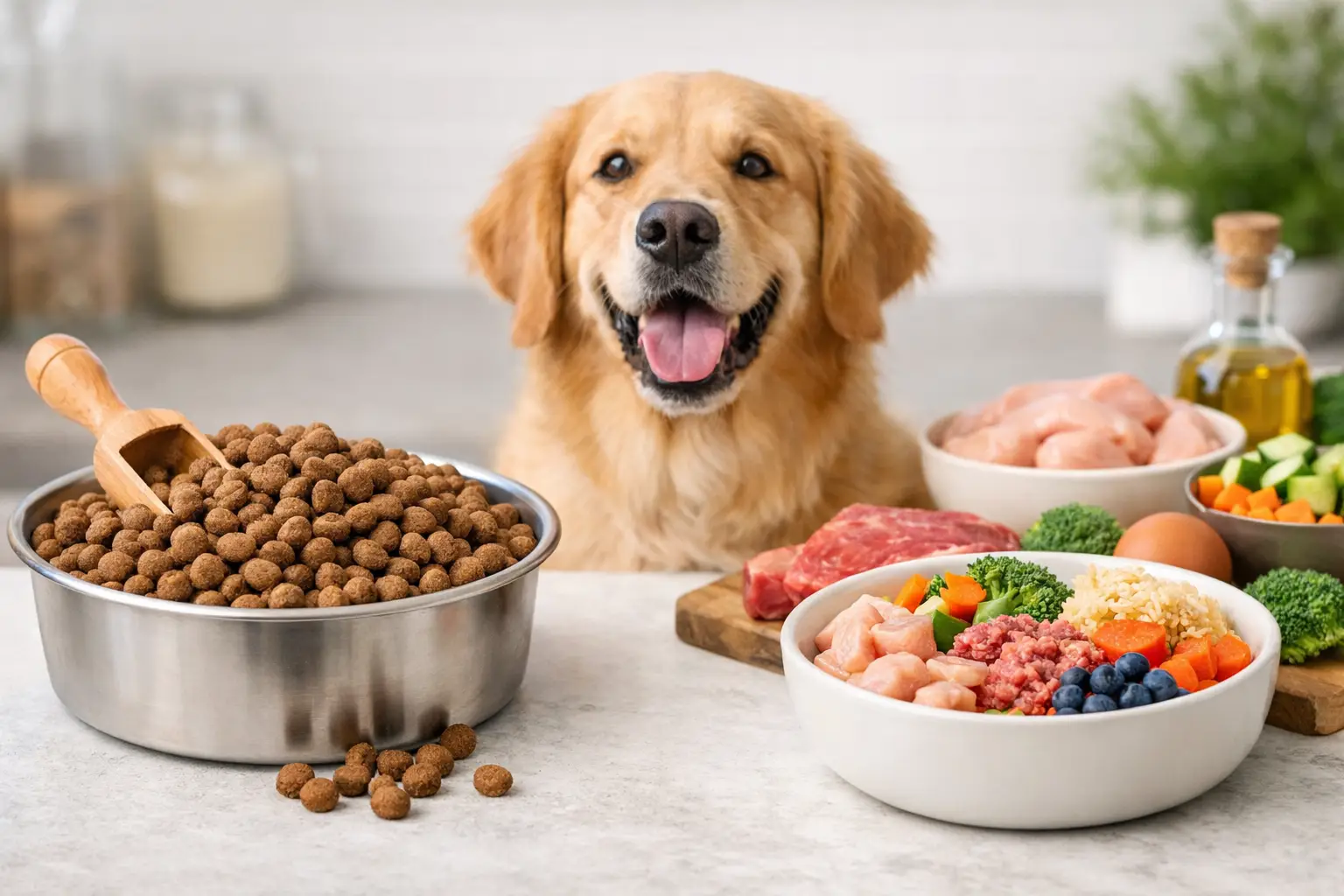
The first few days after changing a pet’s food can tell you a lot. A dog that suddenly gets loose stool, skips a meal, or seems gassy is not necessarily rejecting the new diet – more often, the transition moved too fast. If you’re figuring out how to switch from kibble safely, the goal is not speed. The goal is a steady change your dog or cat can tolerate well.
Pets get used to the texture, moisture level, ingredient profile, and digestibility of what they eat every day. Kibble is dry, heavily processed, and very different from fresh food or raw meals in both water content and how the body handles it. That means even a positive change needs some structure. A careful transition helps reduce stomach upset and gives you a cleaner read on how your pet is actually responding.
How to switch from kibble safely without rushing
For most healthy adult pets, a gradual transition over 7 to 10 days works well. If your dog or cat has a sensitive stomach, is older, has a history of vomiting, or has been eating the same kibble for years, it often makes sense to stretch that timeline to 10 to 14 days.
A practical schedule looks like this: start with about 75 percent old food and 25 percent new food for two to three days. Then move to a 50-50 mix for another two to three days. After that, feed 25 percent old food and 75 percent new food before switching fully to the new diet.
That said, not every pet follows a textbook plan. Some do well right away. Others need to hold at one step longer before moving forward. Stool quality, appetite, and energy matter more than the calendar. If your pet is eating well and producing firm, normal stool, you can continue. If things get loose or your pet seems off, slow down.
Why the transition matters more than people think
A dry kibble diet and a fresh or raw diet do not behave the same way in the bowl or in the gut. Moisture alone changes a lot. Many pets eating dry food are used to getting very little water through meals, while fresh food contains far more natural hydration. That shift can affect stool volume, frequency, and even how quickly food moves through the digestive tract.
Ingredient quality and digestibility also matter. When pets move from highly processed food to meals made with real meat, organs, and other whole ingredients, many owners notice smaller stools, better breath, improved coat condition, and steadier energy. Those are good signs, but the digestive system may still need time to adjust. A slower transition is often the easiest way to avoid mistaking normal adjustment for a problem.
Start with the right portion, not just the right food
One common mistake is changing foods and overfeeding at the same time. Because kibble and fresh food differ in calories, moisture, and density, the scoop you used before may not be the right amount now. Feeding too much of a richer food can create the exact stomach upset people blame on the food itself.
Use the feeding guidance provided for the new diet as your starting point, then watch your pet closely. Your dog should stay interested in meals without acting bloated or uncomfortable afterward. Your cat should eat calmly and maintain normal litter box habits. Portion size may need adjustment based on age, activity level, metabolism, and body condition.
If your pet has weight to lose, this is not the time to slash calories aggressively. Make one change at a time. First transition the food successfully. Then fine-tune the daily amount.
How to switch from kibble safely for sensitive pets
Sensitive pets usually benefit from fewer variables, not more. During the transition, keep treats simple and limited. Avoid adding table scraps, chews, toppers, or supplements unless they are already part of your pet’s normal routine. If your dog gets diarrhea after a food change, it helps to know whether the food caused it or the peanut butter biscuit someone handed over that afternoon.
For especially sensitive dogs and cats, smaller meals can help. Instead of feeding the usual two larger meals, divide the daily food into three or four smaller servings for a few days. That gives the digestive system less to process at one time.
Temperature can matter too. Some pets do better when fresh food is served cool but not ice cold. If meals come straight from the refrigerator, let them sit briefly so they are not shocking to the stomach. If you are transitioning to raw, follow safe handling practices and keep meals properly refrigerated.
What is normal during a food transition
A mild change in stool is common. You may see softer stool for a day or two, especially at each new ratio. Some pets also produce less stool overall once they move away from kibble, because they are digesting and using more of what they eat.
You might also notice your pet drinking less water from the bowl if the new food contains more moisture. That is often expected, not a concern, as long as your pet stays hydrated and acts normal.
Good signs include steady appetite, normal energy, comfortable digestion, and gradual improvements in coat, breath, and stool quality over time. These changes are not always instant, but they are often noticeable within a few weeks.
Warning signs that mean slow down or call your vet
Not every reaction is a normal adjustment. Repeated vomiting, persistent diarrhea, lethargy, refusal to eat, signs of abdominal pain, or blood in stool are reasons to pause and pay attention. If symptoms are severe or last more than a day, contact your veterinarian.
Pets with pancreatitis history, chronic GI disease, diabetes, kidney disease, severe allergies, or immune concerns need a more individualized approach. The safest answer in those cases is not a generic timeline. It is a plan made with your vet and adjusted to the pet in front of you.
Puppies, kittens, seniors, and underweight pets also deserve more attention during any transition. They can absolutely benefit from high-quality fresh diets, but they should not be treated as routine cases.
Mixing kibble and raw during the transition
A lot of owners worry that kibble and raw should never be mixed. In practical feeding, many pets transition this way without issue. The bigger concern is not the act of mixing itself. It is moving too fast, feeding the wrong amount, or handling raw food carelessly.
If your pet does well on a mixed transition, that is often the easiest path. If your dog seems uncomfortable with mixed meals, another option is to feed separate meals during the day for a short period, such as one meal of old food and one meal of new food. It depends on the individual pet.
What matters most is consistency, safe food handling, and close observation. A disciplined transition usually beats an all-at-once switch, especially for pets that have spent years on dry food.
Set expectations for the first month
The first week is about tolerance. The next few weeks are about patterns. Give your pet enough time to show you how the new diet is working. Coat changes, body composition, dental benefits, and energy improvements usually take longer than digestion changes.
This is where many owners do best with a plan. Keep feeding times regular. Measure portions. Watch stool. Notice whether your pet seems satisfied after meals. If you are sourcing fresh food from a company with scheduled pickup or delivery, order ahead so you do not run out and get forced into a sudden change back to kibble.
That practical side matters. A better diet only works if you can feed it consistently.
A simple mindset that helps
The safest transition is usually the least dramatic one. You do not need to overhaul every part of your pet’s routine overnight. Start with one well-balanced food, introduce it gradually, feed the right amount, and let your pet adjust at a reasonable pace.
That approach is not flashy, but it works. And when you give the process enough room, you are far more likely to see the benefits that made you want to leave kibble behind in the first place.
If you want better food to actually lead to a healthier pet, patience at the bowl is where that change starts.
Leave a Reply