

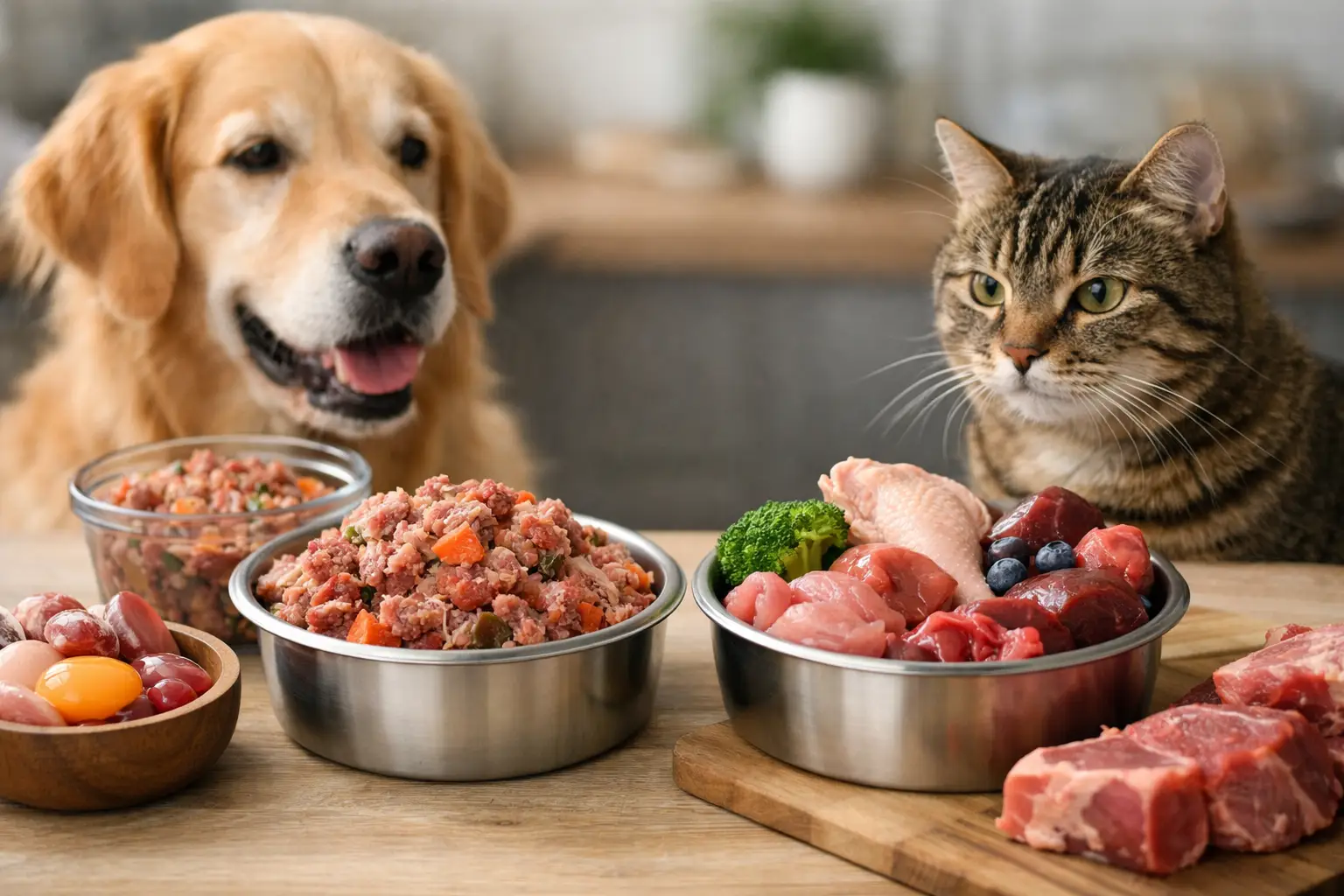
If you have ever stared at a raw pet food label and wondered, is premade raw food complete, you are asking the right question. “Raw” by itself does not tell you whether a food is balanced, safe for long-term feeding, or appropriate for your dog or cat. Plenty of premade raw meals are thoughtfully built for daily use. Plenty are not.
That distinction matters more than the marketing on the front of the package. A food can look clean, use attractive ingredients, and still miss key nutrients. For pet owners trying to move away from heavily processed kibble, the goal is not just fresher food. The goal is a diet that supports energy, muscle maintenance, digestion, skin, coat, teeth, and long-term health.
What does complete mean in raw feeding?
In plain terms, a complete pet food is one that supplies all essential nutrients in appropriate amounts for a specific life stage when fed as directed. That includes protein and fat, but also vitamins, minerals, amino acids, and fatty acids your pet cannot make on their own.
For dogs and cats, “complete and balanced” is not a casual phrase. It should mean the food was formulated to meet recognized nutritional standards for growth, adult maintenance, or all life stages. If a premade raw product is intended to be a full diet, that standard matters.
This is where many pet owners get tripped up. A premade raw meal might include muscle meat, organ meat, and bone, and still not be complete. It may be excellent as part of a rotation, as a topper, or for intermittent feeding, but not enough on its own every day for months or years.
Is premade raw food complete by default?
No. Premade raw food is not complete by default.
Some formulas are designed as full daily nutrition. Others are intentionally sold as base mixes, prey-model style blends, or supplemental foods. The difference is not always obvious unless you read the package carefully.
A blend of ground chicken, liver, and bone may sound solid, but completeness depends on the total nutrient profile, not just a short ingredient list. Calcium-to-phosphorus balance, vitamin E, zinc, manganese, iodine, copper, taurine for cats, and essential fatty acids all matter. You cannot judge that by looks alone.
That is why label language matters. If the company does not clearly state whether the food is complete and balanced, treat that as a sign to ask more questions before making it your pet’s main diet.
How to tell if a premade raw food is complete
Start with the label, but do not stop there.
The clearest sign is a nutritional adequacy statement that says the food is complete and balanced for a specific life stage. If that statement is missing, the food may be intended for supplemental or intermittent feeding only.
Next, look at the product description and feeding directions. A real daily diet usually explains how much to feed based on weight and whether the formula is meant for adult dogs, puppies, adult cats, or kittens. If the brand is vague about who the food is for, that is a problem.
Then look at formulation transparency. Reputable raw companies should be able to explain how their recipes are balanced and what standards they use. You should not have to guess whether nutrients are coming from whole foods, added supplements, or both. Either approach can work if done correctly. What matters is whether the recipe meets the animal’s needs consistently.
Finally, consider whether the recipe is species-appropriate. Dogs and cats do not have the same nutritional requirements. Cats are obligate carnivores and have less room for formulation mistakes. A raw dog food and a raw cat food should not be treated as interchangeable just because both are meat-based.
Why some premade raw diets fall short
The most common issue is that a recipe is built around ingredients, not nutrients.
A company may focus on using good meat, local sourcing, and clean preparation, all of which are valuable. But quality sourcing does not automatically create a complete diet. Even human-grade ingredients can leave nutritional gaps if the formula is not properly balanced.
Another issue is oversimplification. Some pet owners are drawn to short ingredient lists, and there is nothing wrong with wanting straightforward food. But nutrition is not simpler just because the label is shorter. A diet can be minimally processed and still need carefully chosen supplements or additional whole-food ingredients to cover essential nutrients.
There is also the problem of assuming that “natural” means sufficient. Nature is not a formulation method. If a premade raw food is modeled loosely after prey but produced for modern pets with modern feeding patterns, it still needs nutritional accuracy.
Complete raw for dogs versus complete raw for cats
Dogs have more flexibility than cats, but that does not mean anything goes.
A complete raw dog food should provide adequate protein, fat, minerals, and essential vitamins in the right ratios over time. Many dogs do well on balanced premade raw diets, especially when owners want a ready-to-serve option instead of building meals from scratch.
Cats require even tighter formulation. Taurine is the obvious example, but it is not the only one. Cats also have specific needs for vitamin A, arachidonic acid, and other nutrients that must be consistently present in usable amounts. A homemade-looking raw blend may seem carnivore-friendly but still miss what a cat needs for long-term health.
So if you are feeding a cat, the answer to is premade raw food complete should be backed by more than trust in the ingredient list. It should be backed by clear formulation standards.
Whole food balance versus synthetic supplementation
Some owners worry that if a raw food includes added vitamins or minerals, it is somehow less natural. That is not a useful way to judge quality.
Whole foods can contribute a lot nutritionally, and well-designed raw diets often rely heavily on them. But using targeted supplementation to close nutrient gaps is not a weakness. It is often how responsible formulation works.
The better question is whether the finished recipe is balanced and consistent from batch to batch. Small-batch production can be a strength when handled with discipline, but only if the recipe is controlled and repeatable. Good raw feeding is not guesswork.
For families who want the benefits of raw without having to formulate every meal themselves, a well-made premade food should remove uncertainty, not add to it.
When premade raw may not be enough on its own
Even a complete food may need a closer look depending on the pet.
Puppies and kittens have different nutritional demands than healthy adults. Senior pets, highly active dogs, underweight animals, and pets with kidney issues, pancreatitis, food allergies, or other medical conditions may need adjustments beyond a standard formula.
That does not mean premade raw is off the table. It means the right product has to match the pet in front of you. A strong adult maintenance formula is not automatically appropriate for growth or therapeutic use.
Feeding method also matters. If you are mixing premade raw with lots of treats, table scraps, toppers, or rotating in unbalanced foods, the overall diet may stop being complete even if the base food was balanced on paper.
What careful pet owners should ask before buying
Ask whether the food is intended for supplemental feeding or daily feeding. Ask what life stage it is formulated for. Ask how the company balances the recipe and whether they can explain that process clearly.
You should also ask practical questions. How should the food be stored? How long does it stay fresh once thawed? Are portions consistent? Can the company explain sourcing and batch handling in a way that makes sense?
Those questions are not nitpicking. They are part of feeding responsibly. A trustworthy raw food company should welcome them.
For pet owners who value transparency, this is where a smaller operation can sometimes stand out. Companies like Chew Dat Foods build trust by being direct about ingredients, preparation, and how customers receive food. That kind of operational clarity matters because complete nutrition is not just about what goes into the recipe. It is also about handling, consistency, and feeding it as intended.
The real answer to is premade raw food complete
Sometimes yes. Sometimes no.
The right answer depends on whether the specific formula is designed and labeled as complete and balanced for your pet’s life stage, whether the company can explain its nutritional approach, and whether you are feeding it in a way that preserves that balance.
Premade raw can be an excellent option for dog and cat owners who want real food without building diets from scratch. But “premade” is a convenience term, not a nutrition guarantee. A clean ingredient panel, local sourcing, and good intentions are all positives. They just are not the full standard.
If you want better food for your pet, keep asking the harder question. Not just whether it is raw, but whether it is complete enough to support a healthy life, meal after meal. That is the kind of question that protects your pet long after the excitement of switching foods wears off.
Leave a Reply