

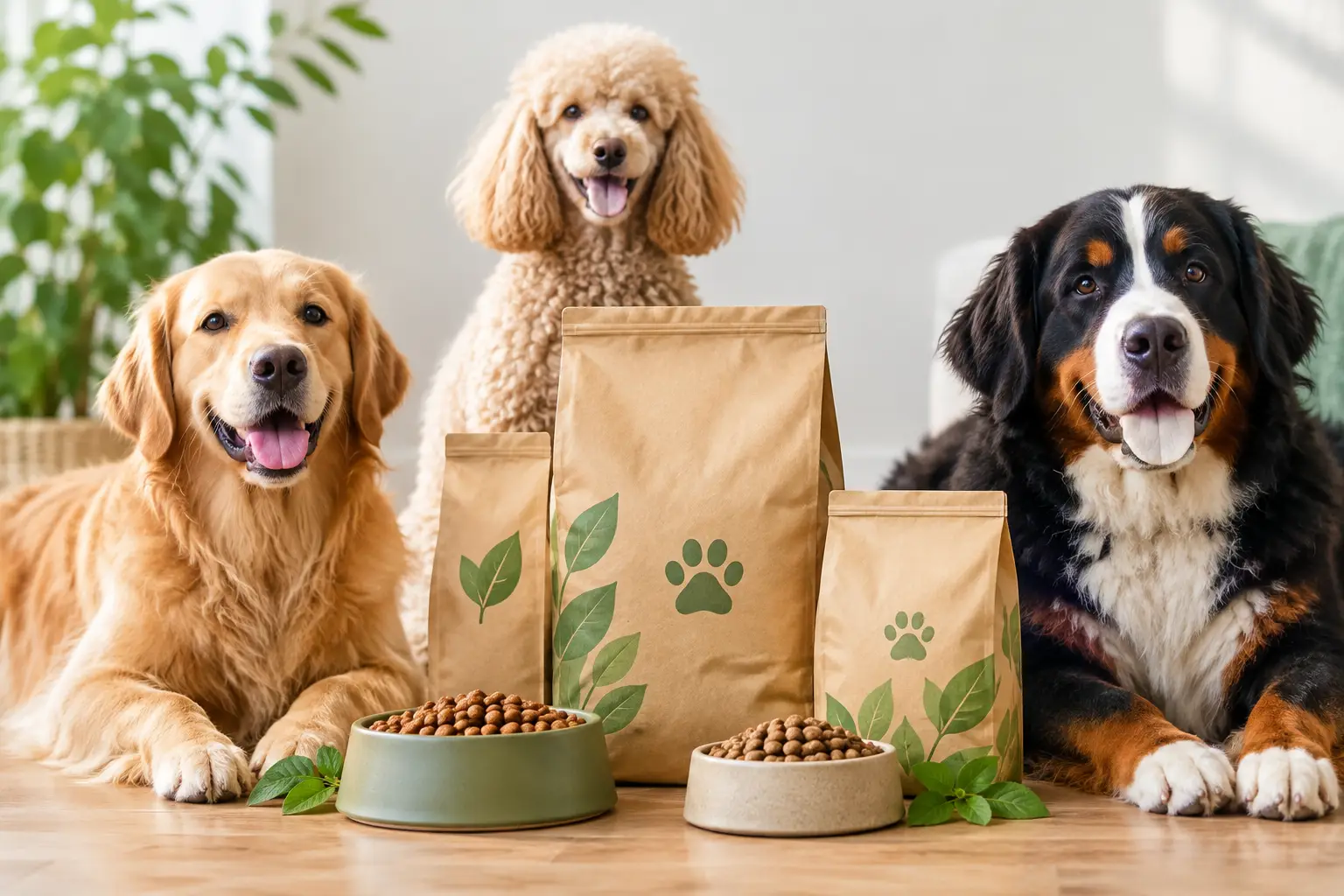
A raw-food order should not leave you with a freezer full of disposable tubs and a trash bin full of materials that are hard to recycle. Eco friendly pet food packaging matters because feeding your dog or cat well should not require creating unnecessary waste week after week.
For raw pet food, though, packaging cannot be judged by appearance alone. A paper-looking pouch may sound responsible, but it is not useful if it leaks, fails to protect food in transit, or cannot be recycled in your area. The right answer is practical: protect the food, protect your pet, and reduce waste where it actually counts.
Why Pet Food Packaging Is More Complicated Than It Looks
Raw meals need dependable protection from the time they are packed until they reach your refrigerator or freezer. Packaging must keep portions contained, prevent cross-contamination, handle cold temperatures, and hold up during delivery or scheduled pickup. That means some materials that work well for dry kibble or treats are not appropriate for fresh, moisture-rich food.
The environmental impact also goes beyond the container itself. A package that uses less plastic but leads to spoiled food is not the better option. Food waste carries its own environmental cost, especially when the meal contains responsibly raised meat and locally sourced ingredients. The most responsible package is one that safely delivers food your pet will eat, then creates as little waste as possible afterward.
This is why reusable systems deserve more attention than packaging claims printed on a label. Reuse can reduce the need to manufacture, ship, and discard a new container with every order. It is not glamorous, but it is measurable.
Reusable Containers Are the Strongest Option
For customers who plan ahead for scheduled pickup or coordinated delivery, reusable containers can make a major difference. Instead of treating every meal as a single-use purchase, the container becomes part of a closed-loop process: food goes out in a durable container, the empty container is returned, cleaned under appropriate food-safety procedures, and used again.
This model works especially well for a local raw-food business because containers do not have to travel across the country to be returned. Customers in pickup communities can bring their empties back at their next order. That simple habit keeps useful materials in circulation and can reduce the ongoing cost of packaging.
At Chew Dat Foods, the reusable container program supports the same practical goal as scheduled co-op-style pickups: keep premium raw feeding accessible while cutting avoidable waste. It asks customers to be responsible about returns, but that shared effort is part of what makes the system work.
Reuse does have trade-offs. Containers need to be durable enough for repeated freezing and washing. They require space for collection, sorting, and sanitation. Customers must remember to return them clean and on time. Still, when a company has organized delivery routes and committed customers, reuse is often more meaningful than switching from one disposable package to another.
What Makes a Reusable Container Worth Using?
A reusable container should be food-safe, freezer-safe, leak-resistant, and sturdy enough to survive repeated handling. It should also be a reasonable shape and size for storage. An oversized container that wastes freezer space or makes portioning difficult is not convenient, no matter how sustainable it sounds.
The return process needs to be clear, too. Customers should know whether containers need rinsing, whether lids are returned, where to bring them, and what happens if a container is damaged. Good systems do not depend on vague good intentions. They make the responsible choice easy to follow.
When Recyclable Packaging Makes Sense
Not every customer can participate in a container-return program. Some live outside a regular route, need shipping options, or do not have a convenient pickup location. In those cases, recyclable packaging may be the most practical alternative, but the details matter.
Rigid plastic containers are commonly accepted by recycling programs, depending on the plastic type and local rules. They can be a realistic choice if they are cleaned before recycling. But a container is only recyclable if your local facility accepts it. The recycling symbol alone does not guarantee that it will be processed.
Flexible pouches are lighter and often use less material than rigid tubs, which can reduce transportation weight. The downside is that many are made from multiple layers of plastic and film to preserve freshness. Those layers make them difficult or impossible to recycle through curbside programs. A pouch may be technically recyclable through a specialty collection program, but that only helps if customers actually have access to one and use it.
Compostable packaging raises similar questions. Some compostable materials need commercial composting facilities, not a backyard pile. Others are not designed for raw, frozen, or high-moisture foods. Before calling a package compostable, a pet food company should be able to explain where it can be composted and whether the material performs safely for the product inside.
How to Spot Greenwashing in Pet Food Packaging
Terms like “earth-friendly,” “sustainable,” and “green” are not enough on their own. They can describe a real improvement, but they can also hide a package that remains difficult to reuse, recycle, or compost.
Ask straightforward questions before you give packaging credit:
- Is the package reusable, recyclable locally, or compostable where I live?
- Does it keep raw food safely contained and frozen or refrigerated as needed?
- Is the packaging made from one material or several bonded layers?
- Does the company offer a return system or instructions for responsible disposal?
- Will the package reduce waste in practice, not just in marketing language?
A company does not need to claim perfection to be responsible. In fact, honest packaging communication is usually more useful when it explains limitations. For example, a durable plastic container used many times may be a better choice than a disposable package marketed as plant-based but headed to a landfill.
Better Packaging Starts With Better Ordering Habits
Customers have more influence than they may realize. Ordering enough food for a planned feeding period can reduce the number of deliveries, cold packs, and individual packages involved. Choosing a scheduled pickup rather than a rushed one-off shipment can also make route planning more efficient.
If your raw food comes in reusable containers, return every container you can. Keep them together in a clean bin near your freezer or entryway so they are ready for the next pickup. If your food arrives in recyclable containers, rinse them promptly after use and check your local recycling requirements before placing them at the curb.
Portion planning matters as well. Properly storing meals in the freezer and thawing only what your pet will eat helps prevent food waste. A high-quality raw meal is made from valuable ingredients. Using it fully is one of the most practical ways to respect the resources behind it.
The Best System Balances Safety, Waste, and Real Life
There is no single package that is perfect for every raw pet food order. A reusable container program is often the best fit for local customers who can reliably return containers. Recyclable rigid packaging may be more realistic for customers without a return route. Flexible pouches can reduce material use in some situations, but only if their end-of-life options are honest and accessible.
The standard should be simple: packaging must protect fresh food first, then minimize waste through reuse or realistic disposal options. Pet owners should not have to choose between feeding a better diet and making an environmentally responsible decision.
The next time you place a raw-food order, look beyond the label and consider the whole loop: how the meal is packed, how it reaches you, how you store it, and what happens to the container after your pet has cleaned the bowl. Small, repeatable choices are what turn better packaging into less waste.
Leave a Reply