

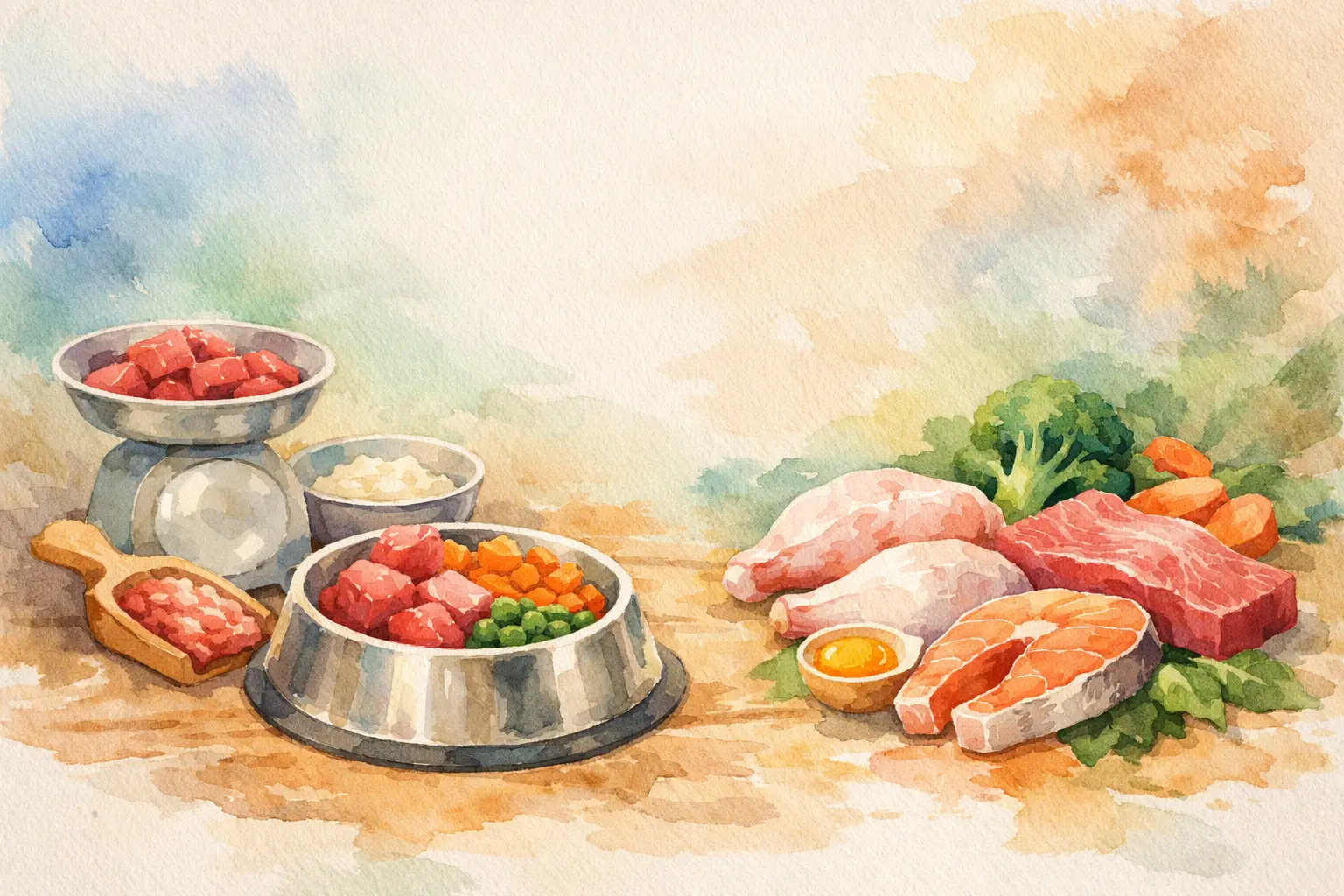
A raw meal that looks perfect in the bowl can still be the wrong amount for the dog standing in front of it. Feed too little, and you may see weight loss, low energy, or constant hunger. Feed too much, and even a high-quality raw diet can lead to unwanted weight gain. If you are figuring out how to portion raw dog meals, the goal is not to guess. It is to feed the dog you actually have – not the average dog on a chart.
Portioning starts with a baseline, but good feeding always includes observation. Your dog’s age, body condition, metabolism, activity level, and whether the meal is fully balanced all matter. That is why experienced raw feeders do not stop at a calculator. They use the numbers to get started, then adjust with intention.
How to portion raw dog meals without guessing
The most common starting point for adult dogs is feeding 2 to 3 percent of ideal body weight per day. Ideal body weight matters more than current weight if your dog is underweight or overweight. A healthy 50-pound adult dog often does well starting around 1 to 1.5 pounds of food per day, then adjusting based on condition and energy.
That range is a starting point, not a rule that fits every dog. A young, active working dog may need more than 3 percent. A senior dog with lower activity may need less than 2 percent. Some dogs burn through calories fast. Others gain weight if you look at them twice. Portioning raw meals correctly means respecting those differences instead of forcing every dog into the same formula.
If you are feeding twice a day, divide the total daily amount into two meals. If your dog does better on one meal or three smaller meals, that can work too, as long as the total daily amount stays appropriate. Meal timing is flexible. Portion size is what keeps nutrition on track.
Start with body weight, then check body condition
A scale gives you data. Your dog’s body condition tells you whether the amount is actually working.
You should be able to feel your dog’s ribs without pressing hard, but you should not see every rib clearly on most dogs. Your dog should have a visible waist when viewed from above and an abdominal tuck when viewed from the side. If the waist disappears and the ribs are hard to feel, portions probably need to come down. If the ribs, spine, and hip bones are becoming too prominent, portions may need to go up.
This is where many owners get tripped up. They assume hunger always means underfeeding. It does not. Some dogs act hungry no matter what you serve. Others are light eaters and maintain perfect condition on less food than expected. The body tells the truth faster than the bowl does.
For that reason, weigh your dog regularly if you can, and pay attention to visible changes over two to four weeks before making major adjustments. A small increase or decrease is usually better than a dramatic swing.
Puppies, seniors, and active dogs need different portions
Puppies are not just small adults. They need more food per pound of body weight because they are growing fast. Young puppies may eat 5 to 10 percent of current body weight daily, with gradual reductions as they mature. Large-breed puppies need especially careful feeding. Too much food can encourage growth that is too rapid, which is not what you want for joints and long-term structure.
Senior dogs can go either direction. Some slow down and need fewer calories. Others lose muscle and need more support, especially if appetite drops or digestion changes. Portion based on condition, not age alone.
Highly active dogs, sporting dogs, and dogs spending long days outdoors often need more food than indoor companion dogs of the same size. Weather can matter too. Cold conditions may increase calorie needs. Hot weather may reduce appetite for a stretch. It depends on the dog and the season.
Portion by calories if you need more precision
Percentage feeding is useful, but calories give you a more exact way to manage weight. This matters most for dogs that need to lose weight, gain weight, or maintain a very specific condition.
Not all raw meals have the same calorie density. A lean turkey recipe and a richer beef recipe may look similar by volume but deliver different energy. That is one reason scooping by eye can create problems over time. If your food supplier provides calories per pound, patty, or container, use that information. It helps you portion with more confidence.
This is especially helpful for small dogs, where even a few extra ounces can be significant, and for dogs on rotation diets where different proteins and fat levels are used through the month. A balanced raw diet is still a diet. The numbers count.
Why volume is less reliable than weight
A cup is easy, but it is not accurate enough for raw feeding. Raw food density changes depending on moisture, grind, bone content, and ingredient mix. Weighing meals in ounces or grams is more reliable than estimating with a scoop.
A basic kitchen scale solves most of this. Once you know your dog’s daily target, weigh out each meal and stay consistent for a couple of weeks. That consistency makes it much easier to tell whether your dog needs more or less.
Adjust portions based on results, not assumptions
The biggest mistake in raw feeding is treating the first number as final. Portioning should be reviewed when your dog’s life changes.
If your dog is spayed or neutered and becomes less active, calorie needs may drop. If your dog starts hiking every weekend, training hard, recovering from illness, or building muscle, needs may rise. If stool becomes consistently loose or chalky, meal composition may need attention too, not just quantity.
Good portioning is part math, part management. You are looking for steady energy, healthy stool, stable weight, good muscle tone, and a body condition that stays where it should. When those markers shift, the portion should be reconsidered.
Signs your dog may be getting too much or too little
Overfeeding often shows up as gradual weight gain, reduced waist definition, heavy stools, and lower enthusiasm for meals. Underfeeding can look like unwanted weight loss, poor recovery after activity, persistent hunger, reduced stamina, or a dog that starts looking tucked up in the wrong way.
There are exceptions. Some digestive issues, stress, parasites, or medical conditions can mimic feeding problems. If your dog’s condition changes suddenly or significantly, do not assume it is just a portion issue.
Balanced raw meals make portioning simpler
Portion control is easier when the food itself is already complete and balanced. If you are building meals at home from separate meats, organs, and bone, your portioning job is harder because you also have to manage nutritional balance across time. You are not just measuring quantity. You are measuring composition.
That is one reason many dog owners prefer ready-to-eat raw meals. When the formulation is handled properly, you can focus on feeding the right amount instead of constantly recalculating what needs to be added. It removes a lot of the guesswork and helps keep daily feeding practical.
Chew Dat Foods takes that same practical view. Real food should improve your dog’s health, but it also needs to be portioned in a way that works for everyday life. A healthy feeding routine only sticks if it is clear, manageable, and consistent.
How to portion raw dog meals for real life
The best system is the one you will actually follow. For some owners, that means weighing and packing two days of meals at a time. For others, it means portioning a full week into labeled containers so no one in the house has to guess at breakfast. If your dog eats different amounts on training days versus rest days, note that and plan for it.
Keep raw meals thawed safely and portioned cleanly. Use dedicated containers, wash hands and surfaces well, and avoid letting food sit out longer than needed. Good food handling matters just as much as good measuring.
If you are switching from kibble to raw, expect a short adjustment period. Appetite, stool size, and feeding rhythm may change. That does not always mean the portion is wrong. Give your dog a little time, but stay observant.
A dog does not need a trendy feeding plan. A dog needs enough balanced food, fed consistently, with adjustments made when the body says it is time. Start with the math, watch the dog, and let results guide the next move.
Leave a Reply