

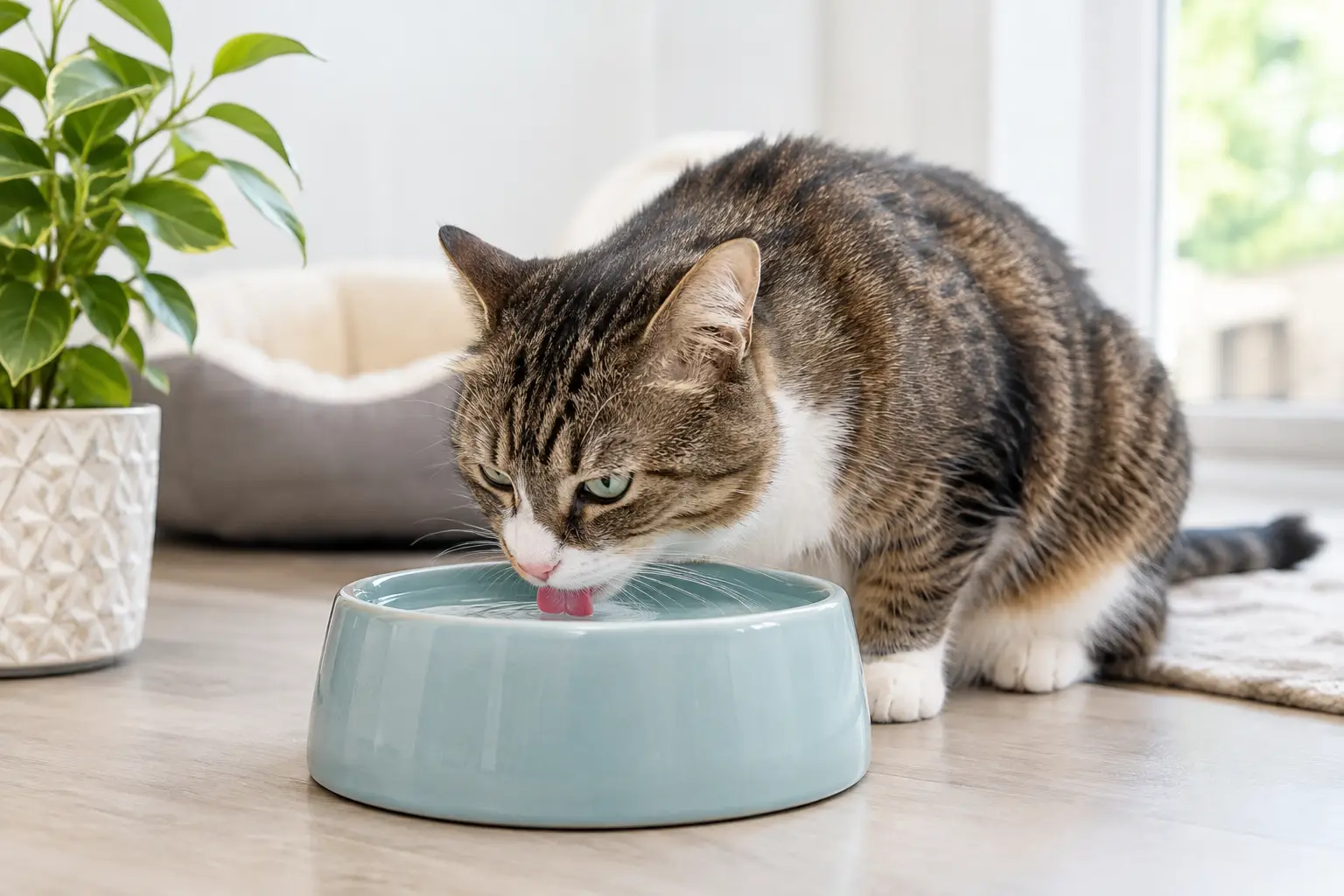
Cats can look perfectly normal while taking in less water than they need. They may still eat, nap in their favorite spot, and greet you at the kitchen, all while mild dehydration is quietly making their urine more concentrated. That is why a practical guide to feline hydration starts with more than watching the water bowl. It starts with understanding how cats are built to get moisture.
Why cats are prone to low water intake
Domestic cats descended from desert-dwelling hunters. Their bodies are designed to get much of their water from prey, not from frequent trips to a bowl. A mouse, bird, or other small prey animal is mostly moisture. Dry kibble, by comparison, contains very little water.
That difference matters. A cat eating a moisture-rich diet may not drink much from a bowl because much of their fluid arrives with every meal. A cat eating primarily dry food often needs to make up the difference by drinking, and many cats simply do not do that consistently enough.
This is not a reason to panic every time your cat ignores the water bowl. It is a reason to look at total daily moisture. Food, drinking water, weather, activity level, age, medications, and health status all affect the full picture.
Guide to feline hydration: start with the food bowl
The most dependable way to increase moisture intake is usually through meals. Wet food and properly formulated raw food contain substantially more water than kibble, which helps cats consume fluids in the same way their bodies naturally expect.
For families feeding a complete, balanced raw diet, that built-in moisture is one of the practical benefits. Chew Dat Foods prepares ready-to-eat raw meals with real, human-grade ingredients, making it easier to offer a food-first approach to hydration without trying to convince every cat to become a big bowl drinker.
That said, diet changes should be made thoughtfully. If your cat has kidney disease, urinary crystals, diabetes, pancreatitis, food sensitivities, or a history of urinary blockage, talk with your veterinarian before changing foods. The best feeding plan depends on the diagnosis, lab work, medications, and the type of urinary issue involved.
You can also add a small amount of plain water to a moisture-rich meal if your cat accepts it. Start with a teaspoon or two rather than turning dinner into soup. Some cats enjoy a softer texture; others will walk away if a familiar meal suddenly feels different. Let your cat set the pace.
Keep additions simple and safe
Plain water is the safest add-in. If you use broth to tempt a picky cat, it must be completely free of onion, garlic, excess salt, and seasonings. Many store-bought broths are made for people, not pets, and are not a safe shortcut.
Avoid forcing water by syringe unless a veterinarian has specifically instructed you to do so. Giving liquid too quickly can cause stress or aspiration. A cat that will not eat or drink needs an assessment, not a home workaround that delays care.
Make drinking water easier to choose
Even cats eating wet or raw food should always have access to fresh water. The goal is not to make the bowl complicated. It is to remove the small things that make a cat decide not to use it.
Place water away from the litter box and, when possible, away from the food dish. Many cats prefer those resources separated. A quiet location with a clear view of the room often works better than a bowl tucked into a busy corner.
The bowl itself can make a difference. Some cats dislike their whiskers brushing the sides of a deep, narrow dish. Try a wide ceramic or stainless steel bowl and wash it daily. Plastic can hold odors and scratches more easily, which may make it less appealing over time.
Multiple water stations are useful in multi-level homes and homes with more than one pet. Put them where your cat already spends time: near a favorite window, on a quiet floor landing, or in a low-traffic room. The point is convenience, not decoration.
A pet fountain helps some cats because moving water catches their attention. It is not automatically better for every household. Fountains need regular cleaning, fresh filters when applicable, and a routine that keeps biofilm from building up. If that maintenance will not happen consistently, a clean still bowl is the better choice.
Know what normal looks like for your cat
There is no single water-bowl number that tells the whole story, especially when cats eat moisture-rich foods. Instead, pay attention to patterns. You should know your cat’s usual appetite, energy, litter box habits, stool consistency, and drinking behavior well enough to spot a change.
A healthy, well-hydrated cat generally has normal gums that feel slick and moist, not tacky. Their skin should return promptly when gently lifted over the shoulders, although this test is less reliable in older cats and cats with loose skin. Urine should be produced regularly, but the amount and clump size will vary with diet and litter type.
Watch for these changes, particularly when they occur together:
- A sudden increase or decrease in drinking
- Small, hard, or infrequent stools
- Tacky gums, weakness, hiding, or unusual lethargy
- Reduced appetite, vomiting, or repeated trips to the litter box
- Straining to urinate, crying in the box, or producing little to no urine
Do not assume these signs are just dehydration. Increased thirst can point to kidney disease, diabetes, hyperthyroidism, or medication effects. Vomiting and low appetite can cause dehydration quickly. Urinary symptoms can signal a painful emergency.
Urinary trouble is not a wait-and-see problem
A cat that strains to urinate, repeatedly visits the box, licks the genital area, cries out, or produces only drops of urine needs prompt veterinary attention. For male cats especially, a urinary obstruction can become life-threatening fast.
It is easy to mistake straining for constipation, particularly in a home with multiple cats where litter box habits are harder to track. When you are unsure, treat it seriously and call your veterinarian or an emergency clinic. Hydration supports urinary health, but it cannot clear an obstruction, diagnose crystals, or replace medical care.
Hydration changes with age, season, and routine
Older cats deserve closer observation. They may have declining kidney function, dental discomfort that changes how they eat, or mobility issues that make a distant water bowl less convenient. Place water where an older cat can reach it without climbing stairs or competing with another pet.
Heat, travel, and household disruption also change needs. During Tennessee and Mid-Atlantic summer heat, keep cats indoors in air-conditioned spaces when possible, refresh water more often, and make sure carriers used for travel allow safe access to water during longer trips. Cats that are stressed by visitors, construction, or a move may eat and drink less than usual.
A new food routine can affect intake too. If you transition from kibble to a higher-moisture diet, your cat may drink less from the bowl because they are getting more moisture at mealtime. That can be normal. What matters is that your cat is eating well, acting normally, and urinating without difficulty.
Build a routine you can actually maintain
The best hydration plan is usually boring in the best way: fresh water, clean bowls, moisture-rich meals, and a quick daily look at appetite and litter box output. Do not chase every social-media trick or keep changing bowls, fountains, and flavors so often that you cannot tell what works.
If you have several cats, scoop litter at least daily and watch for changes in each cat’s normal output. Consider separate feeding areas if one cat tends to finish everyone else’s meal. A simple note on your phone can be useful when you are monitoring a senior cat or a cat recovering from illness.
Your cat does not need a dramatic hydration hack. They need consistent access to clean water, food that supports appropriate moisture intake, and an owner who notices when their normal routine changes. That kind of attention catches problems early and gives your cat the steady, practical care they depend on.
Leave a Reply