

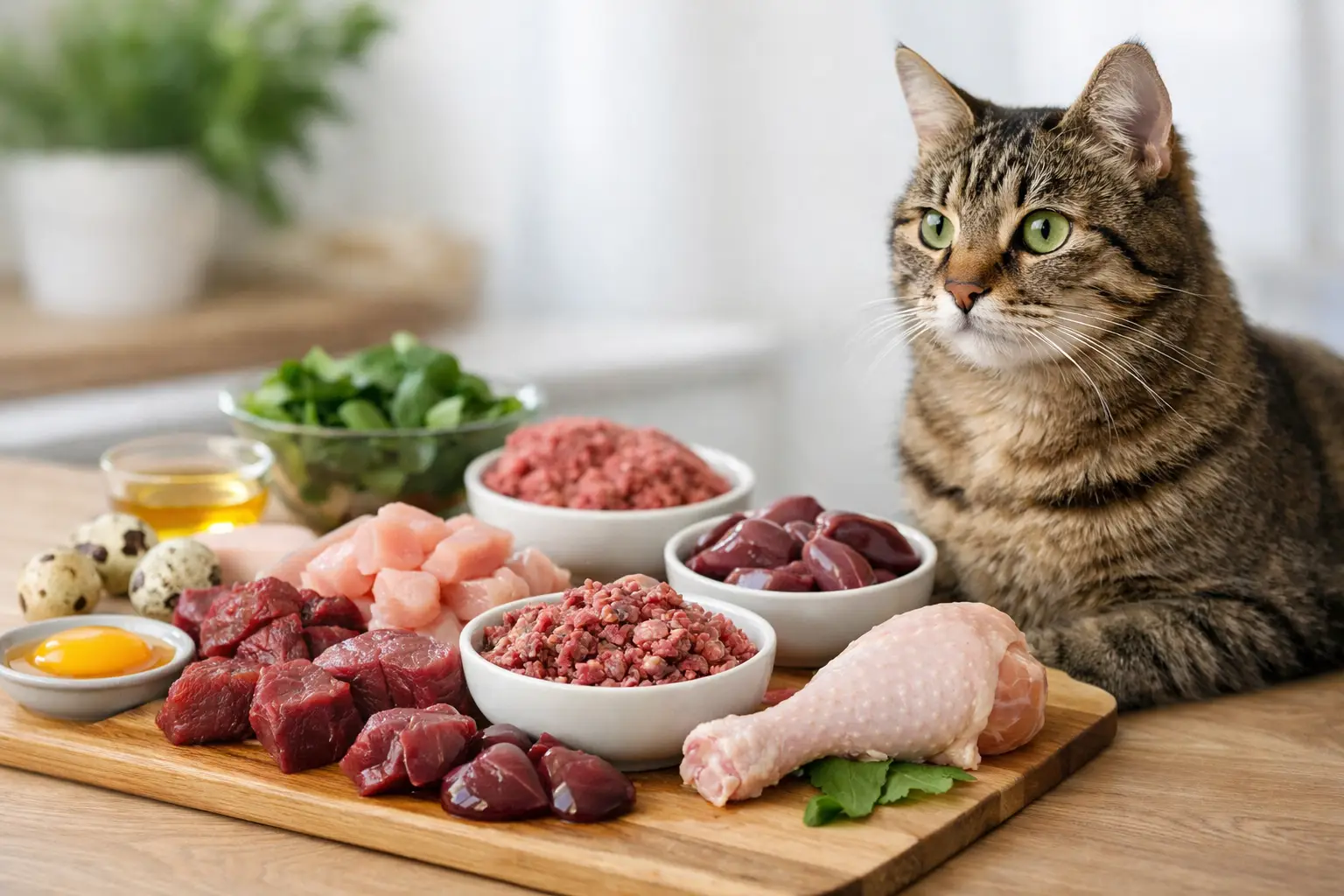
If your cat turns up their nose at dry food but shows real interest when meat hits the cutting board, that tells you something. Cats are obligate carnivores, and the best raw food for cats should reflect that biology instead of forcing a highly processed diet to do all the work.
That does not mean every raw product on the market deserves your money. Some raw cat foods are thoughtfully balanced and carefully handled. Others lean on marketing words, skip critical nutrients, or make feeding raw feel harder than it needs to be. If you are trying to choose well, the goal is not just raw. The goal is complete, practical, and safe raw nutrition your cat can actually thrive on.
What makes the best raw food for cats?
The best raw food for cats starts with animal protein as the foundation, not an afterthought. Cats need meat, organs, and appropriate fat levels to support muscle maintenance, energy, skin health, and normal body function. A formula built around quality muscle meat but missing key organ content or proper supplementation can still fall short.
Balance matters as much as ingredients. A cat cannot live well on plain chicken breast or ground beef alone. Raw feeding done right should provide a proper ratio of protein, fat, moisture, vitamins, and minerals, including nutrients cats must get from animal-based foods. Taurine is the big one most owners have heard of, but it is not the only one that matters. Calcium, phosphorus, vitamin A, and other micronutrients need to be present in the right range, not guessed at.
Texture and moisture also count. Cats naturally have a low thirst drive, so moisture-rich food helps support hydration in a way kibble simply does not. That can be especially helpful for cats that are prone to urinary issues or never seem interested in their water bowl. Raw meals with a proper moisture content often support better hydration without owners having to fight for every extra sip.
Ingredient quality matters more than trendy claims
A short ingredient list can be a good sign, but only if the ingredients are doing real nutritional work. You want clearly named proteins and organs, not vague terms like meat by-product or animal derivatives. Transparency matters because if a brand is not straightforward about what is in the bowl, there is no reason to trust how that food was sourced, handled, or balanced.
Human-grade ingredients, local sourcing, and small-batch production are not just nice talking points when they are backed by discipline. They can reflect tighter quality control and more accountability. Still, they do not automatically make a food complete. A raw diet should be evaluated on both sourcing and formulation.
This is where many cat owners get tripped up. They see grass-fed, pasture-raised, cage-free, or antibiotic-free and assume that means nutritionally superior across the board. Those details can absolutely matter, especially if you care about sourcing standards, but they do not replace balanced formulation. A beautiful ingredient deck does not fix a nutrient gap.
The difference between homemade raw and ready-to-eat raw
Some cat owners like the idea of preparing raw meals at home. On paper, it sounds simple. Buy fresh meat, add a few extras, portion it out, and you are done. In reality, homemade raw can go wrong fast if the recipe is not built for feline requirements.
Cats are less forgiving than many dog owners realize. Small nutrient imbalances repeated over time can create real health problems. That is why ready-to-eat raw meals appeal to many households. They remove the guesswork, reduce prep time, and make portioning much easier. For busy owners who still want better nutrition than mass-market kibble, that convenience matters.
There is also a food safety side to this. Safe raw feeding depends on ingredient handling, storage, temperature control, sanitation, and consistent production standards. A reputable ready-to-eat raw brand should take those details seriously because they affect both pet health and owner confidence.
How to judge raw cat food without falling for hype
When comparing products, start with the basics. Is the food complete and balanced for cats, or is it sold as supplemental feeding only? That distinction matters. Supplemental products may be fine for occasional use, but they are not meant to carry the full nutritional load of a daily diet.
Next, look at the protein source. Many cats do well on poultry, rabbit, or beef, but the best choice depends on the individual cat. Some cats have sensitivities. Some need a richer formula. Some do better with a simpler protein rotation. There is no single protein that works best for every cat, which is why honest feeding guidance should leave room for adjustment.
Then consider fat level and digestibility. A very rich formula may be excellent for one cat and too much for another, especially during a transition. Stool quality, appetite, body condition, and coat changes usually tell you more than a front-label claim ever will.
Finally, pay attention to practical consistency. Can you reliably get the product? Is it packaged in a way that supports safe storage and easy feeding? Can you portion it without waste? A raw feeding plan only works long term if it fits real life.
Best raw food for cats should make feeding simpler, not harder
Raw feeding gets abandoned all the time for one reason that has nothing to do with nutrition. The process becomes a hassle. If ordering is confusing, packaging is wasteful, or portions are awkward, people drift back to what is easier.
That is why the best raw food for cats is not only about what is in the recipe. It is also about whether the system behind the food is dependable. Small-batch production, preplanned fulfillment, and reusable container programs can make premium feeding more manageable and less wasteful when done well. For households that value quality but also need affordability, that kind of structure is practical, not flashy.
For example, cat owners in parts of Tennessee, Virginia, and Maryland often have limited access to fresh raw food through traditional retail. A direct-to-customer pickup or group delivery model can be a real advantage when it keeps product fresh and pricing under better control. That only works, though, when the company is disciplined about schedules and customers are willing to plan ahead.
Transitioning your cat to raw the right way
Even the best raw food can cause problems if you rush the switch. Some cats transition easily. Others need patience. Texture, temperature, and smell all affect acceptance, especially for cats raised on dry food.
Start slow if your cat has a sensitive stomach or strong food preferences. A gradual introduction helps you monitor digestion and appetite while giving your cat time to adapt. Some owners have success serving raw slightly warmed, never cooked, to make it more aromatic. Others begin with a familiar protein before rotating to new ones.
You should also expect a little trial and error. A cat may love one formula and reject another. That does not mean raw feeding is failing. It means your cat is being a cat.
If your cat has a medical condition, especially kidney disease, pancreatitis, severe food allergies, or a history of urinary issues, diet changes deserve extra care. Raw can be a strong option in some cases, but not every formula fits every health profile. That is one of those areas where blanket advice does more harm than good.
Signs you chose a good raw food
A better bowl should lead to visible results over time. Many owners notice improved enthusiasm at mealtime, smaller and less odorous stools, better coat quality, and steadier energy. Dental benefits can also improve when a cat is eating a species-appropriate diet with less starch, though raw food is not a substitute for full dental care.
The more important sign is overall consistency. Your cat maintains a healthy weight. Digestion stays steady. The coat looks healthy. Litter box habits are normal. You are not constantly troubleshooting.
That is what makes a food worth staying with. Not a trendy label. Not a dramatic promise. Just a formula that is balanced, responsibly made, and realistic for your household to feed week after week.
A good raw diet should feel like common sense once you are on the right one. Feed the animal in front of you, pay attention to the details that actually matter, and choose a source that treats nutrition and handling with equal seriousness. Your cat does not need hype. Your cat needs food built for a carnivore.
Leave a Reply