

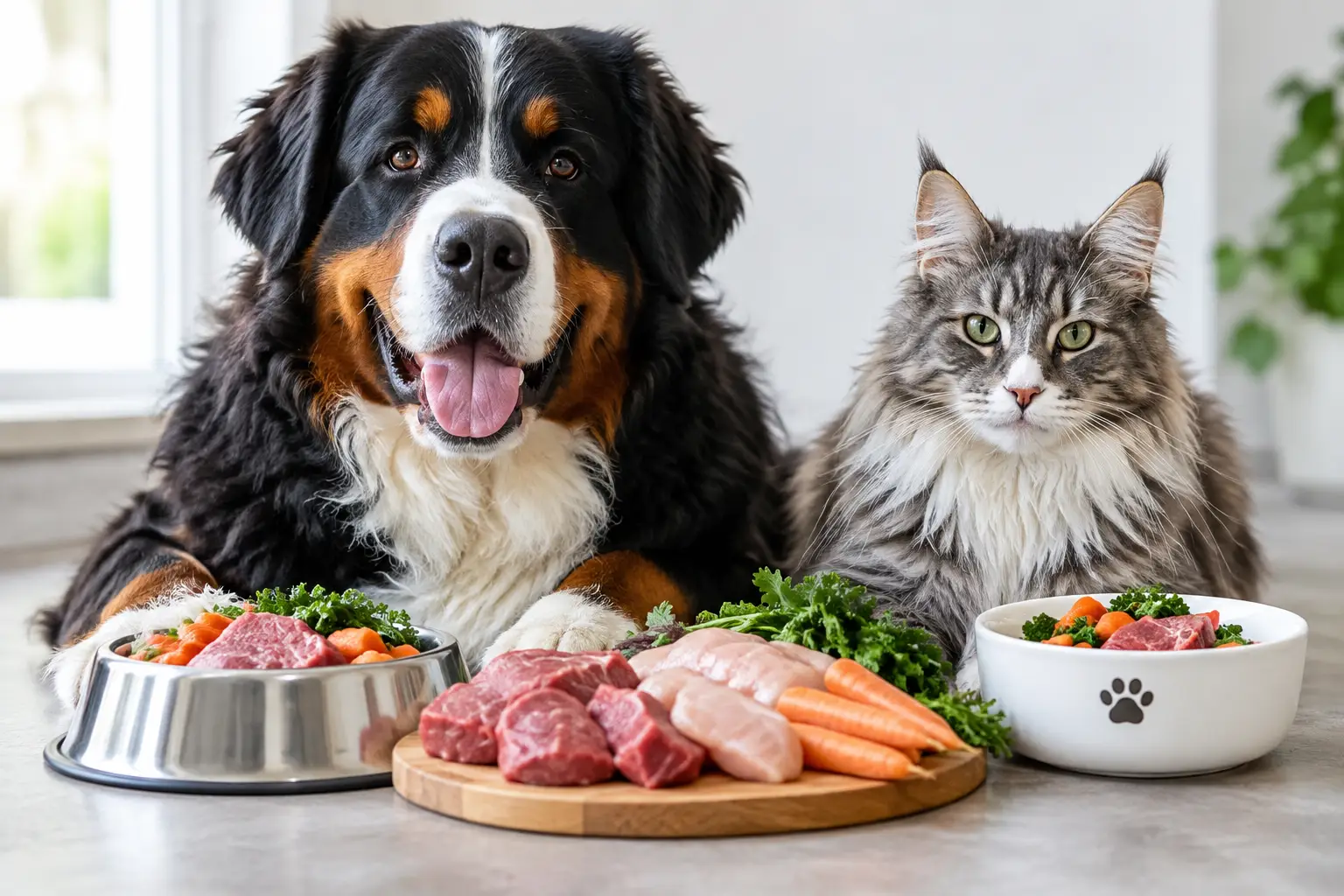
Most pet owners do not start looking at raw meals because kibble suddenly stopped being convenient. They start because something is not sitting right: a dull coat, inconsistent stools, low interest in food, recurring skin concerns, or the feeling that a bag of heavily processed pellets is not the whole answer for an animal they consider family.
A raw diet is not a shortcut, and it is not a miracle cure. Done carelessly, it can leave nutritional gaps or create unnecessary food-safety risks. Done with complete, balanced recipes, quality ingredients, and disciplined handling, it gives dogs and cats food that looks and functions more like food.
What Raw Meals Should Actually Provide
The word “raw” tells you how a food is prepared. It does not automatically tell you whether the recipe is nutritionally sound. A meaningful raw meal needs more than muscle meat in a container.
Dogs and cats require protein, fat, essential fatty acids, vitamins, and minerals in the right proportions. Cats have particularly strict nutritional needs as obligate carnivores, including adequate taurine and animal-based nutrients. Dogs may tolerate a broader range of ingredients, but they still need a recipe built for long-term nourishment rather than a mix of whatever is left over from the butcher counter.
That is why complete and balanced matters. A properly formulated meal accounts for the role of meat, organs, bone or a carefully measured calcium source, and targeted nutrients where needed. The goal is not to make a bowl look impressive. The goal is to feed a dependable diet day after day.
A rotation of proteins can be useful for many pets, especially when it is introduced gradually and each recipe remains complete. But more variety is not always better when a pet has a sensitive stomach, known food intolerances, or a medical condition. In those cases, consistency may be the smarter choice. Your veterinarian can help guide feeding decisions for pets with diagnosed health concerns.
Why Ingredient Quality Changes the Conversation
When you read a pet-food label, the first question should be simple: what is this made of? Clear answers matter. Named animal proteins, recognizable organs, produce when it serves a purpose, and straightforward supplementation are easier to evaluate than vague ingredient categories and long lists of fillers.
Human-grade, locally sourced ingredients do not make a diet right by themselves, but they show a standard of care. They give a producer greater visibility into what enters the kitchen and give customers a better understanding of what reaches their pet’s bowl. For families feeding raw, transparency is not a bonus. It is part of the product.
At Chew Dat Foods, that standard also means working in small batches. Small-batch production supports freshness and allows closer attention to each run of food. It is a practical approach, not a marketing trick. Fresh food requires planning, temperature control, reliable pickup coordination, and customers who are ready to store it correctly when it arrives.
Benefits Pet Owners Often Notice
Every animal responds differently, so no responsible company should promise the same outcome for every dog or cat. Still, many owners choose raw meals because they want to see changes that are easy to recognize in daily life.
A well-formulated, moisture-rich diet may support firmer, smaller stools because more of the food is used by the body. Pets may show steadier energy, greater interest at mealtime, shinier coats, and healthier-looking skin. Chewing and eating species-appropriate foods can also support oral health, although raw food is not a replacement for veterinary dental care.
The most valuable change is often less dramatic: owners feel confident about what they are feeding. They can identify the ingredients, understand the purpose of the recipe, and stop guessing whether a low-cost filler is doing most of the work.
That confidence should be earned with a feeding plan, not built on hype. A healthy pet still needs routine veterinary care, clean water, appropriate activity, and attention to body condition. Food is foundational, but it is one part of responsible care.
Transitioning to Raw Without Creating a Mess
Some pets can switch quickly. Others need time. The right transition depends on the animal’s age, current diet, digestive history, medications, and individual sensitivity.
For a pet with a stable digestive system, a gradual transition over roughly seven to 10 days is often a practical starting point. Begin with a small portion of raw food mixed into the current diet, then increase the raw portion as stools and appetite remain normal. If stools become loose or your pet seems uncomfortable, slow down rather than pushing ahead.
Puppies, kittens, senior pets, and animals with medical conditions deserve extra care. They may need a more specific plan, especially if they have kidney disease, pancreatitis, immune concerns, or a history of digestive trouble. This is where individualized veterinary guidance matters most.
Portion size also needs attention. Feeding charts are a starting point, not a permanent answer. Watch your pet’s body condition, energy level, and weight. A very active young dog may need more than the chart suggests, while a less active indoor cat may need less. Adjustments should be made thoughtfully, not by large swings from one meal to the next.
Safe Handling Is Part of Feeding Raw
Raw feeding asks more of the person holding the container. That is fair. Any raw animal protein needs careful handling, whether it is for your pet or your own dinner.
Keep raw meals frozen until you are ready to use them. Thaw portions in the refrigerator, not on the counter. Serve them in a clean bowl, refrigerate leftovers promptly, and discard food that has been sitting out too long. Wash hands, utensils, bowls, and preparation surfaces with hot, soapy water after contact.
Households with very young children, elderly family members, pregnant individuals, or anyone who is immunocompromised should discuss raw feeding with their healthcare provider and veterinarian. Risk is not handled by ignoring it. It is handled by clear routines and honest decisions about what works for your household.
The Practical Side: Raw Food Needs a System
The biggest barrier to raw meals is often not motivation. It is logistics. Freezer space, ordering deadlines, pickup timing, and reusable containers can feel like extra work when you are used to grabbing a bag of food during a grocery run.
But a good system makes raw feeding manageable and keeps quality from being sacrificed for convenience. Scheduled co-op style pickups and coordinated delivery routes let a small producer make fresh food efficiently, reduce unnecessary packaging, and keep pricing more grounded than a retail model built around individual shipping and disposable containers.
For customers in Chew Dat Foods service areas, planning ahead is part of the value. Order by the stated deadline, be ready for the scheduled pickup or delivery, and return reusable containers as directed. Those habits help keep food moving cold, production predictable, and waste lower for the whole community.
A reusable-container program may seem like a small detail, but it reflects a larger commitment. Premium pet food should not require endless single-use packaging or inflated costs created by wasteful logistics. When customers participate, they help make better food more practical for more families.
Questions Worth Asking Before You Buy
Before choosing any raw food, ask whether it is complete and balanced for the life stage you are feeding. Ask how the food is stored, how it is produced, and what the ingredient names actually mean. Ask how the company handles pickup, delivery, thawing guidance, and customer questions.
Also ask whether the feeding model fits your life. The best diet is not simply the one with the most impressive label. It is the one you can store safely, serve consistently, afford responsibly, and maintain long enough for your pet to benefit from it.
Raw meals can be a practical step toward feeding pets with more intention, but only when the standards behind the food match the care you already give at home. Start with a complete recipe, follow safe handling practices, and pay close attention to the animal in front of you. That is where better feeding decisions begin.
Leave a Reply