

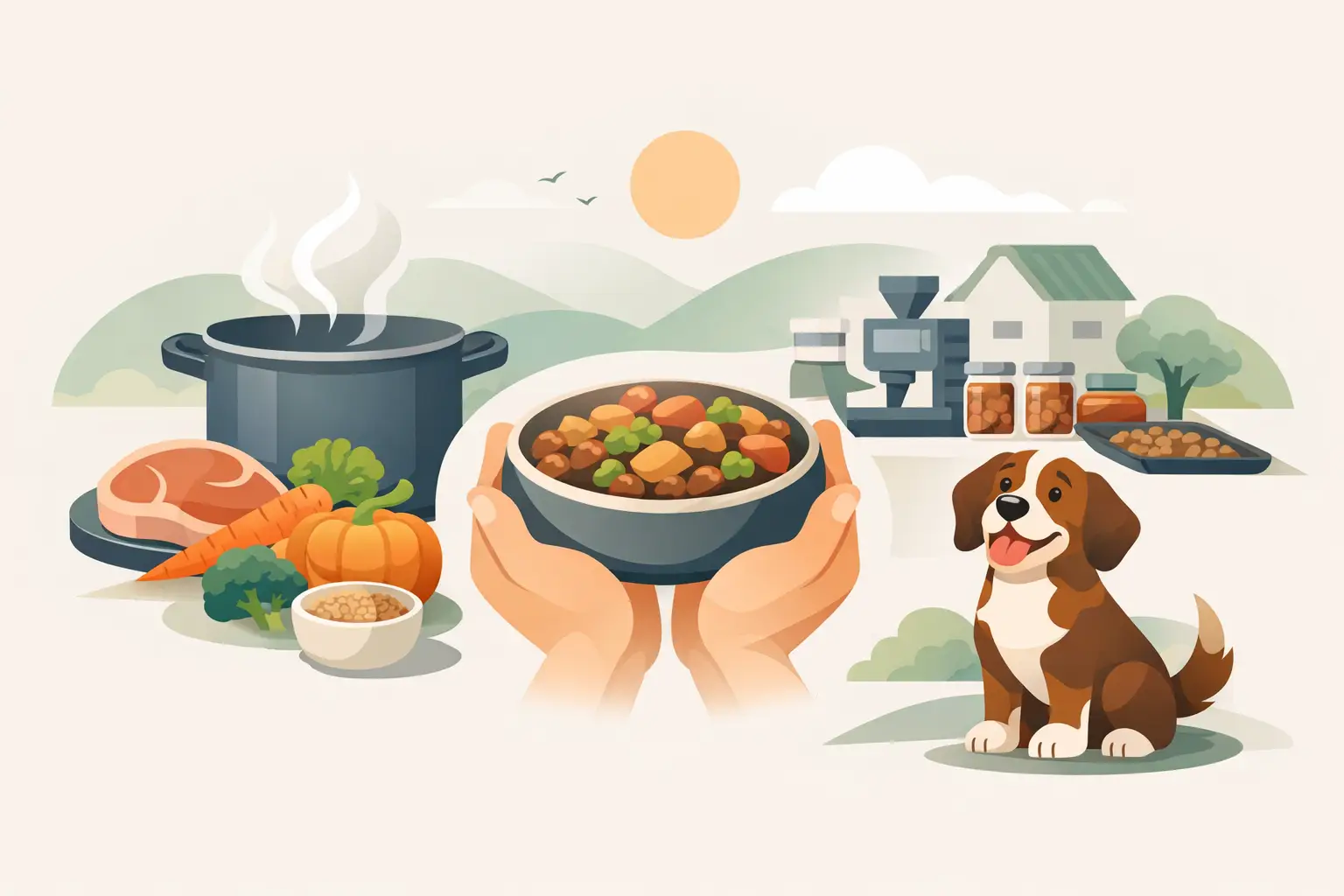
Walk down any pet food aisle and you will see the phrase small batch dog food used like a badge of honor. Sometimes it means something real. Sometimes it is just packaging.
For dog owners trying to feed better than kibble without getting lost in marketing claims, that distinction matters. If you are paying for higher quality, you should be getting higher quality – not just a nicer label, a rustic font, and a story about happy farms. Small batch production can improve freshness, consistency, and ingredient oversight, but only when the company behind it is disciplined about sourcing, formulation, and handling.
What small batch dog food actually means
At its most basic, small batch dog food is food made in limited production runs rather than massive industrial volumes. That usually means shorter production cycles, smaller ingredient lots, and closer handling from sourcing to packaging.
In practice, though, the term is not tightly regulated in the way many customers assume. One brand may produce genuinely limited batches with local ingredients and direct oversight. Another may call itself small batch simply because one line is produced in smaller quantities than its other products. The phrase sounds precise, but the quality behind it depends on the operation.
That is why the better question is not just whether a food is small batch. It is how the food is made, what goes into it, and how much accountability exists between ingredient sourcing and the bowl.
Why small batch dog food appeals to serious pet owners
Most people do not switch feeding styles because of a trend. They switch because their dog gives them a reason. Maybe the coat looks dull. Maybe digestion is inconsistent. Maybe teeth are getting worse faster than expected. Maybe energy is flat, stools are poor, or mealtime has become a negotiation.
Small batch production appeals to owners who want more control over what they are feeding. The attraction is not just the size of the batch. It is the idea that fewer steps, fewer warehouses, and fewer anonymous suppliers can lead to a better product.
When done right, small-batch production often supports cleaner ingredient sourcing and more careful formulation. It also makes it easier for a company to respond quickly if there is a supply issue or quality concern. In a giant production system, changing one ingredient can ripple across huge inventories. In a smaller system, there is usually more room for direct decision-making.
That said, smaller does not automatically mean better. A poorly formulated food made in a tiny kitchen is still a poorly formulated food. Batch size helps most when it is paired with experience, nutrient balance, sanitation standards, and honest sourcing.
The real benefits of small-batch production
Freshness is one of the clearest advantages. Smaller runs can reduce the amount of time food sits in storage before it reaches the customer. That matters even more with raw food, where handling and timing are part of quality, not an afterthought.
Quality control is another major reason many owners seek out small batch dog food. With smaller ingredient lots, there is often better traceability. A company that knows exactly where its protein, organs, and produce came from is in a much stronger position than one relying on broad commodity supply chains.
Ingredient transparency also tends to improve in smaller operations. Brands built around direct customer relationships usually do not hide behind vague terms because their customers ask questions and expect real answers. They want to know what protein is being used, whether ingredients are human-grade, where they were sourced, and how the food is portioned.
There is also a practical benefit that does not get discussed enough: consistency in philosophy. In many small family-run operations, the people producing the food are the same people answering customer questions and feeding similar diets to their own animals. That does not guarantee perfection, but it often leads to more accountability and less distance between promise and product.
Where small batch dog food can fall short
The trade-offs are real, and serious pet owners should understand them.
First, availability may be more limited. Smaller production schedules often mean customers need to plan ahead instead of making last-minute purchases. For some families, that is no issue. For others, especially those used to grabbing food at a big-box store, it takes adjustment.
Second, product lines may be narrower. A small producer may focus on doing a few formulas well instead of offering twenty different recipes. That can be a strength if quality is the priority, but it may feel restrictive for owners looking for endless variety.
Third, not every small operation has the same nutritional discipline. Raw feeding in particular requires more than good intentions. Dogs need properly balanced meals, not a random mix of meat and vegetables. If a company cannot clearly explain how its recipes are built and why, that is a problem regardless of batch size.
Price is another factor. Small-batch food can cost more than grocery-store kibble because the ingredients, labor, and logistics are different. Even so, higher cost should come with visible value. Better sourcing, better handling, and better pet outcomes are worth paying for. Empty branding is not.
How to judge small batch dog food without getting fooled
Start with the ingredient panel, but do not stop there. Look for clearly named animal proteins and organs, not vague labels that leave too much room for substitution. Ask whether the ingredients are human-grade and whether sourcing is local or at least transparent.
Then look at how the company talks about production. Are they specific about how the food is made, stored, and delivered? Or do they lean on broad emotional language without much detail? Good operators tend to be clear because clear systems protect the product.
If you are considering raw small-batch food, handling and fulfillment matter just as much as formulation. Cold-chain discipline, pickup schedules, delivery coordination, and packaging choices are part of product quality. Food can be excellent on paper and poorly managed in real life.
That is one reason many experienced raw feeders prefer direct-to-customer models with scheduled pickups or organized local delivery. It is less glamorous than grabbing a bag off a shelf, but it can support better freshness and lower waste. A reusable container system, for example, may not sound flashy, yet it says a lot about how a company thinks about cost control, product turnover, and operational discipline.
Small batch and raw feeding often go together
There is a natural connection between small batch production and raw feeding because raw food is less forgiving of sloppy systems. If you are working with real meat, organs, and whole-food ingredients, the process has to be tight.
That is where a smaller production model can make sense. It allows for more direct oversight, shorter time from prep to customer, and better coordination around inventory. It can also make premium feeding more practical when the company is willing to organize around co-op style pickups, regional drop points, or reusable packaging instead of passing every cost to the customer.
For many dog owners, that balance is the sweet spot. They want real-food nutrition and visible health benefits, but they also need a system that is sustainable week after week. A feeding plan only works if it is nutritionally sound and logistically realistic.
Chew Dat Foods is built around that exact idea: premium raw meals made in small batches with human-grade ingredients, then distributed through planned pickups and regional delivery so customers can feed better without paying for wasteful overhead.
Who small batch dog food is best for
It is usually a strong fit for owners who care about ingredient quality, can plan orders ahead, and want more confidence in what their dog is eating. It also makes sense for people who have already seen the limits of highly processed diets and want a more direct approach to nutrition.
It may be less ideal for households that need maximum convenience at all times or are not ready to manage freezer space, pickup timing, or feeding transitions. That does not mean they can never make the switch. It just means success depends on matching the food to the household, not just the marketing.
If your dog is thriving on its current diet, there is no prize for changing foods just to follow a trend. But if you are looking for better digestion, cleaner ingredients, stronger energy, healthier skin and coat, or a feeding model that feels more honest, small-batch food is worth a serious look.
What matters most in the end
The best small batch dog food is not the one with the prettiest branding or the loudest health claims. It is the one backed by real sourcing, balanced formulation, disciplined handling, and a company willing to tell you exactly how the food gets from its kitchen to your dog.
That kind of transparency is harder to fake than a label. And for owners who believe food quality shows up in the body over time, that is usually where the right decision starts.
Leave a Reply