

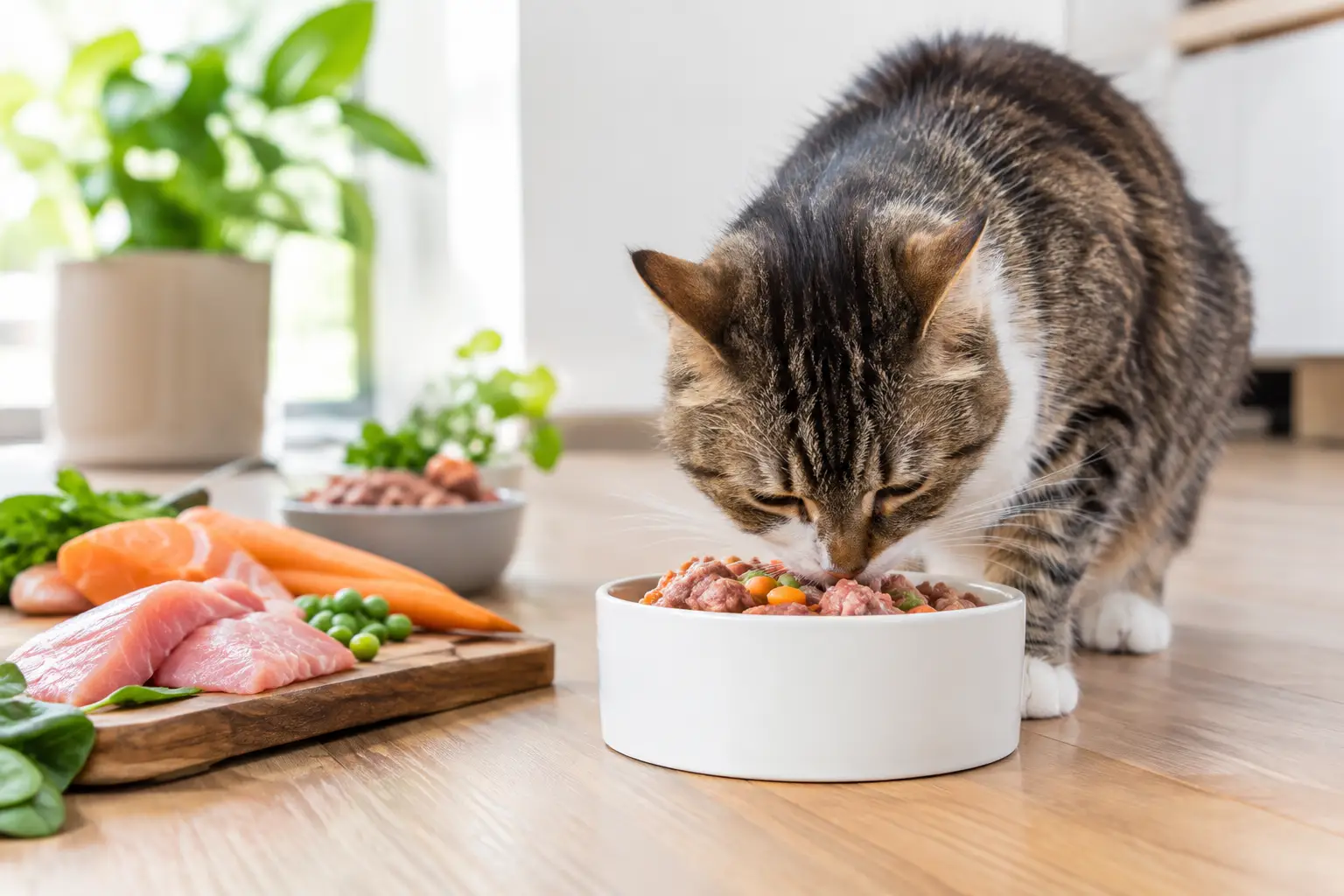
A bag can say “human grade” and still leave a cat parent with the question that matters most: is this food actually built for my cat? This human grade cat food review looks past the marketing language and focuses on what deserves your attention – ingredient quality, nutritional completeness, safe handling, and whether the food fits your cat’s real needs.
Cats are not small dogs, and they are not designed to thrive on a diet built around cheap fillers. They are obligate carnivores. Animal-based protein, moisture, essential fatty acids, taurine, and the right balance of vitamins and minerals are not optional extras. They are the foundation of a cat’s diet.
What “Human Grade” Really Means
Human grade generally means ingredients are sourced from the same supply chain and handled to standards suitable for human food. That is a meaningful difference from vague terms such as “premium,” “natural,” or “wholesome,” which do not tell you much on their own.
But human grade is an ingredient and handling standard, not a complete nutritional verdict. A cat food can contain beautiful cuts of meat and still be incomplete if it does not provide the nutrients cats require in the proper amounts. On the other hand, a complete and balanced food may not use every ingredient you would personally choose. Both sides of the label matter.
A useful review starts with this distinction: human-grade ingredients can be a strong sign of quality, but they do not replace formulation, testing, and responsible feeding practices.
Human Grade Cat Food Review: What to Check First
The first question is whether the food is labeled complete and balanced for your cat’s life stage. Kittens, pregnant or nursing cats, and adult cats do not have identical needs. A food meant for supplemental feeding, treats, or occasional rotation should not become the entire diet unless a qualified veterinary nutrition professional has designed it that way.
Next, read the ingredient panel with a cat’s biology in mind. Named animal ingredients should be easy to identify. Chicken, turkey, beef, rabbit, and organs such as liver or heart are clear ingredients. Broad terms that do not identify the animal source deserve more questions, especially if your cat has sensitivities.
For a meat-forward food, organs are not a red flag. In a properly formulated recipe, they can supply naturally occurring nutrients that muscle meat alone does not provide. The issue is not whether organs are present. The issue is whether the overall recipe is balanced and consistently produced.
Moisture also deserves more credit than it gets. Many cats have a low natural thirst drive and may not drink enough to make up for a dry diet. Fresh and raw foods commonly contain much more moisture than kibble, which can be helpful for cats that do not visit the water bowl often. That does not mean any wet food is automatically right for every cat, but hydration is a real part of the feeding conversation.
A Good Ingredient List Is Not Enough
When pet owners see a short list of recognizable ingredients, it is easy to assume the food is automatically complete. That is where many homemade and boutique-style diets fall short.
Cats need taurine, calcium, phosphorus, vitamin E, certain B vitamins, fatty acids, and other nutrients in precise ranges. Too little or too much of certain nutrients can create problems over time. For example, feeding plain meat without an appropriate calcium source is not a balanced long-term plan. Feeding too much liver can also create nutritional imbalances.
This is why the manufacturer should be able to answer basic questions clearly. Is the recipe complete and balanced? What life stage is it designed for? How is nutritional adequacy established? What are the handling instructions? If the answer is vague, the food may be better treated as a topper or rotation item rather than your cat’s sole diet.
A trustworthy company does not expect you to take “human grade” on faith. It should be transparent about what is in the food, how it is made, and how to feed it.
Raw Cat Food Has Benefits and Responsibilities
For many cats, a properly formulated raw diet can be an appealing option because it is meat-based, moisture-rich, and minimally processed. Some owners report more consistent stools, improved coat condition, stronger appetite, or better energy after a careful transition. Those results are individual, not guaranteed outcomes, and they should not replace veterinary care when a cat is unwell.
Raw feeding also requires discipline. Raw food must stay cold, be thawed safely, and be served in clean dishes. Unfinished food should not sit out for hours. Wash hands, clean preparation surfaces, and follow the producer’s storage instructions exactly. These steps are especially important in homes with young children, older adults, pregnant people, or anyone with a compromised immune system.
Not every household is a good fit for raw feeding, and that is worth saying plainly. If safe refrigeration, freezer space, and consistent cleanup are not realistic, a high-quality cooked wet food may be the better choice. The best food is not the one with the most impressive label. It is the one that is nutritionally appropriate and can be handled correctly, every day.
Watch Your Cat, Not Just the Bowl
A food review is incomplete if it only talks about ingredients. Your cat gets the final vote.
During a transition, pay attention to appetite, stool quality, vomiting, scratching, litter box habits, energy, and body condition. A shiny coat is nice, but it should not distract from bigger measures of health, such as maintaining a healthy weight and normal bathroom habits. Cats are skilled at hiding discomfort, so meaningful changes deserve attention.
Transition slowly unless your veterinarian gives different instructions. Start by mixing a small amount of the new food into the current diet, then increase it over several days or longer as tolerated. Cats can be particular, and a gradual switch gives their digestive system and preferences time to adjust.
Portion control matters, too. Fresh food may look less processed, but calories still count. An indoor adult cat with a quiet routine needs a different feeding amount than a growing kitten or an active outdoor cat. Use feeding guidance as a starting point, then adjust based on body condition and your veterinarian’s advice.
The Price Question Is Fair
Human-grade cat food usually costs more than mass-market kibble. Higher-quality animal ingredients, smaller-batch production, cold storage, and careful logistics all add real costs. The right comparison is not simply price per bag. Consider price per daily meal, ingredient transparency, waste, convenience, and whether the food is complete enough to serve as the main diet.
It also helps to be realistic about the system behind fresh food. Scheduled production and pickup are not as spontaneous as grabbing a bag at a big-box store, but they can help a small producer keep food fresh and reduce unnecessary packaging. Reusable containers can reduce waste and help control costs when customers return them consistently.
For cat owners in Chew Dat Foods service areas, planned pickup or coordinated delivery can make a fresh feeding routine more practical without turning premium nutrition into a retail markup game. That only works when customers order by the deadline, show up for pickup, and follow storage directions at home. Good nutrition is a shared responsibility.
Questions Worth Asking Before You Buy
Before changing foods, ask whether the recipe is complete and balanced for your cat’s life stage, whether animal ingredients are clearly named, and how the company manages formulation and quality control. Ask how long the food stays safe in the refrigerator after thawing and whether it can be refrozen. Ask for feeding guidance based on your cat’s current weight and ideal weight.
If your cat has kidney disease, urinary concerns, diabetes, food allergies, a history of pancreatitis, or any ongoing medical issue, bring your veterinarian into the decision early. Diet can be part of a health plan, but it should not become a substitute for one.
The strongest reason to choose a human-grade cat food is not the phrase on the package. It is the confidence that comes from knowing where the ingredients came from, how the recipe is balanced, and how to serve it safely. Feed the cat in front of you, stay consistent with the routine, and choose a company willing to be as transparent as you are careful.
Leave a Reply