

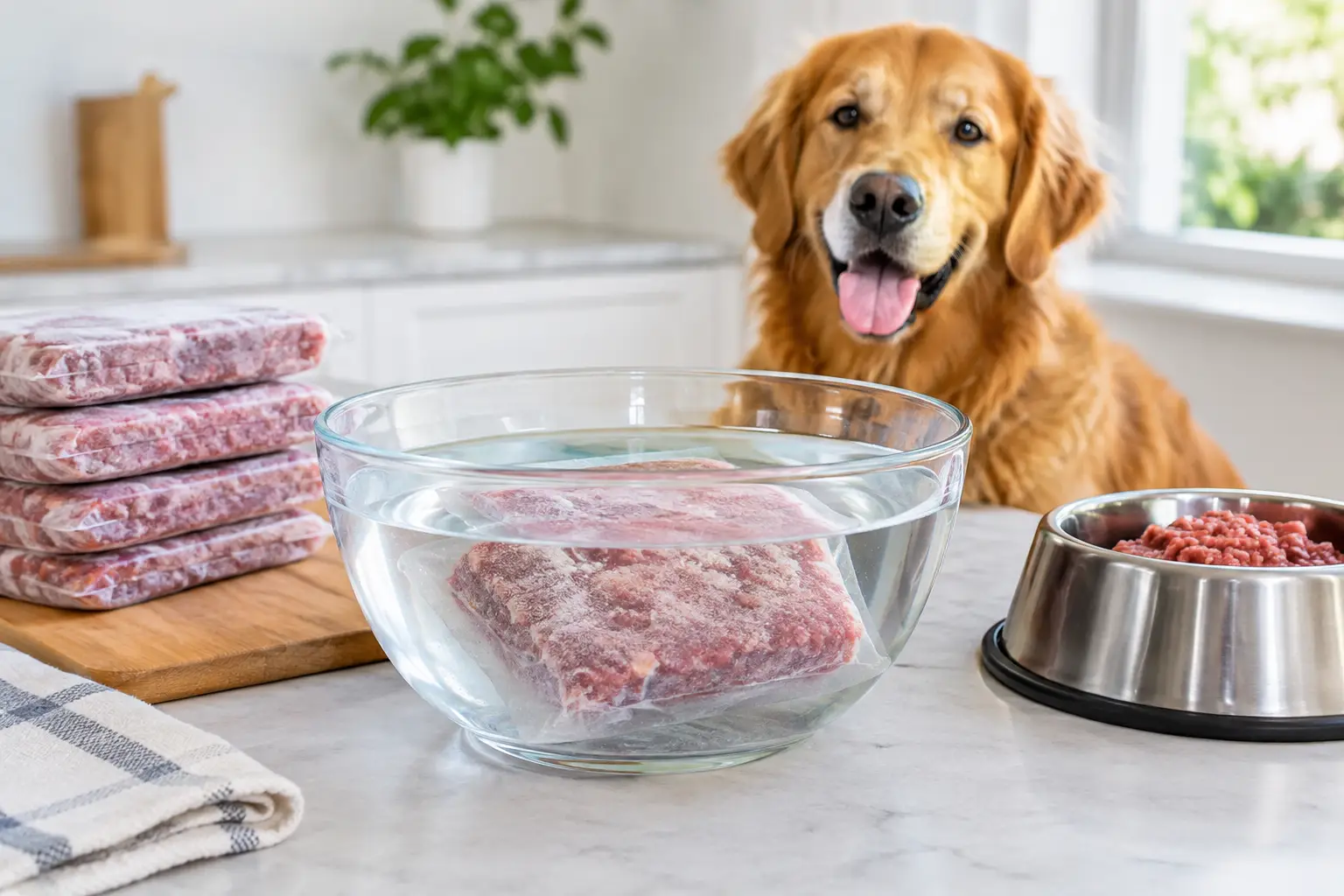
A frozen raw meal is only as good as the way it is handled before it reaches your cat’s bowl. Knowing how to thaw raw cat food keeps the meal at a safe temperature, preserves its fresh texture, and makes feeding time easier for both you and your cat. The best method is not complicated: plan ahead, thaw in the refrigerator, and serve a measured portion rather than leaving food out all day.
Raw feeding asks for a little more routine than pouring kibble from a bag. That routine is worthwhile when it helps you serve real, properly handled food with confidence. A few simple habits also prevent the common problems that make raw feeding feel difficult, such as forgotten meals on the counter, overly warm food, or a container that is still frozen solid at dinner.
How to thaw raw cat food in the refrigerator
The refrigerator is the safest and most reliable place to thaw raw cat food. Move your cat’s next meal from the freezer to the refrigerator about 12 to 24 hours before you plan to feed it. Larger containers or multi-day portions may need closer to 24 to 36 hours, especially if your refrigerator runs cold.
Place the container on a plate, tray, or in a sealed bag while it thaws. This catches condensation or any leaks and keeps raw juices away from produce, ready-to-eat foods, and refrigerator shelves. Store it on a lower shelf whenever possible.
A meal does not need to be completely soft to be usable. If the food is still slightly frozen in the center but you can scoop or portion what your cat needs, that is usually fine. In fact, many cats enjoy a meal that is cool but not icy. If your cat turns away from refrigerator-cold food, let the portion sit in the bowl for a few minutes before serving. Do not use the counter as the thawing method.
Once thawed, follow the storage guidance on your specific food label. In general, use refrigerated raw food within a few days rather than stretching it through the week. Freshness matters, and raw meals are not a product to treat casually after thawing.
Build thawing into your evening routine
The easiest raw-feeding system is a one-day-ahead system. Each evening, move tomorrow’s food from the freezer into the refrigerator. If you feed twice a day, you can thaw one day’s worth at a time or use smaller portions that make each meal simple to serve.
For households using larger containers, portioning can make a major difference. When the food is partially thawed enough to work with safely, divide it into clean, meal-sized containers and refrigerate or refreeze portions promptly according to the product’s handling instructions. Small portions thaw faster, reduce waste, and help you avoid repeatedly warming and cooling the same container.
This is especially helpful for cats because their meals are smaller. A large package can be convenient for storage, but it should not force you to guess at portions or keep opening the same thawed food longer than necessary.
Do not thaw raw cat food on the counter
Leaving raw cat food on the kitchen counter may seem like the fastest answer when dinner is approaching, but it creates the wrong conditions for food safety. The outside of the food warms first while the center remains frozen. That means the meal can spend too long in a temperature range where bacteria can multiply more quickly.
Avoid thawing raw food in a sunny window, garage, porch, vehicle, or near a heat source for the same reason. A cool-looking room is not a refrigerator, and an insulated bag is not a long-term thawing plan.
If you accidentally leave a raw meal out for an extended period, use caution. When you cannot confidently determine how long it has been sitting out or how warm it became, throwing it away is the responsible choice. Saving a small amount of food is never worth taking a chance with your cat’s health.
Why microwaving is not a good shortcut
Microwaving can create hot spots that partly cook the food while other areas stay frozen. That is not the texture or temperature you want for a raw meal. It can also make food containing ground bone unevenly heated and difficult to mix consistently.
If a meal needs to warm slightly after refrigerator thawing, there is a better option. Keep it sealed and set the container in a bowl of cool-to-lukewarm water for a short time, changing the water if needed. The food should only be warmed enough to take the edge off the chill, not heated. Once it is soft enough to portion, serve it promptly.
This method is best for a last-minute adjustment, not your regular thawing plan. Refrigerator thawing remains the standard because it keeps the food cold from start to finish.
Serve only what your cat will eat
Cats are often deliberate eaters. Some finish a raw meal right away; others inspect it, take a few bites, and return later. Raw food should not stay available for hours like dry kibble.
Serve the portion your cat is likely to finish in one sitting. If food remains after roughly 20 to 30 minutes, pick it up and refrigerate it only if it has remained cool and your cat has not heavily worked through it. When in doubt, discard leftovers rather than repeatedly returning them to the refrigerator and bowl.
This may take a little observation at first. A growing kitten, a highly active cat, and a senior cat can all have different eating patterns. Start with an appropriate daily amount, divide it into the number of meals your cat does best with, and adjust based on body condition, appetite, and guidance from your veterinarian.
A cat that prefers grazing may need a transition period. Instead of leaving raw food down all day, offer smaller scheduled meals. Consistent mealtimes help you monitor appetite, reduce waste, and notice quickly if something changes with your cat’s health.
Keep the thawing area clean
Raw feeding does not require a complicated sanitation system. It does require the same common-sense handling you would use with raw meat in your own kitchen. Clean hands, clean bowls, and clean preparation surfaces are part of serving a quality meal.
Wash your hands with soap and warm water before and after handling the food. Wash bowls after each meal, and clean any utensils, counters, or trays that contact raw food. If you use reusable food containers, wash and dry them thoroughly before returning them to your rotation.
Keep your cat’s food separate from human meal prep when possible. A dedicated scoop, spoon, or set of feeding utensils removes confusion and makes cleanup faster. If children or other pets are in the home, keep thawing containers and feeding areas out of reach until it is time to serve.
These details matter because a raw diet should be handled with discipline, not fear. Thoughtful storage and cleanup protect your home while allowing your cat to enjoy the benefits of a fresh, species-appropriate meal.
What if your cat will not eat thawed raw food?
Sometimes the issue is not the food itself but the temperature. Cats can be picky about meals that are too cold straight from the refrigerator. Try serving a small portion after it has rested for a few minutes, or gently bring the sealed container closer to room temperature with the brief lukewarm-water method described above.
Texture can also matter. Mix the food well after thawing so moisture and ingredients are distributed evenly. If your cat is new to raw feeding, a gradual transition from their previous diet may be more successful than a sudden switch. Moving too quickly can lead to digestive upset or simple refusal, even when the new food is a better nutritional fit.
For cats with medical conditions, unusual appetite changes, or ongoing digestive concerns, speak with your veterinarian. A healthy feeding plan should fit the individual cat, not just a general rule.
A freezer-to-bowl routine that works
Keep most of your supply frozen, move the next day’s meals into the refrigerator each evening, and use clean meal-sized portions. That is the practical rhythm. It protects freshness without turning feeding time into a daily scramble.
At Chew Dat Foods, we believe better nutrition should come with clear, workable routines. Once thawing raw food becomes part of your household schedule, it is simply another way you show up for the health of the cat depending on you.
Leave a Reply