

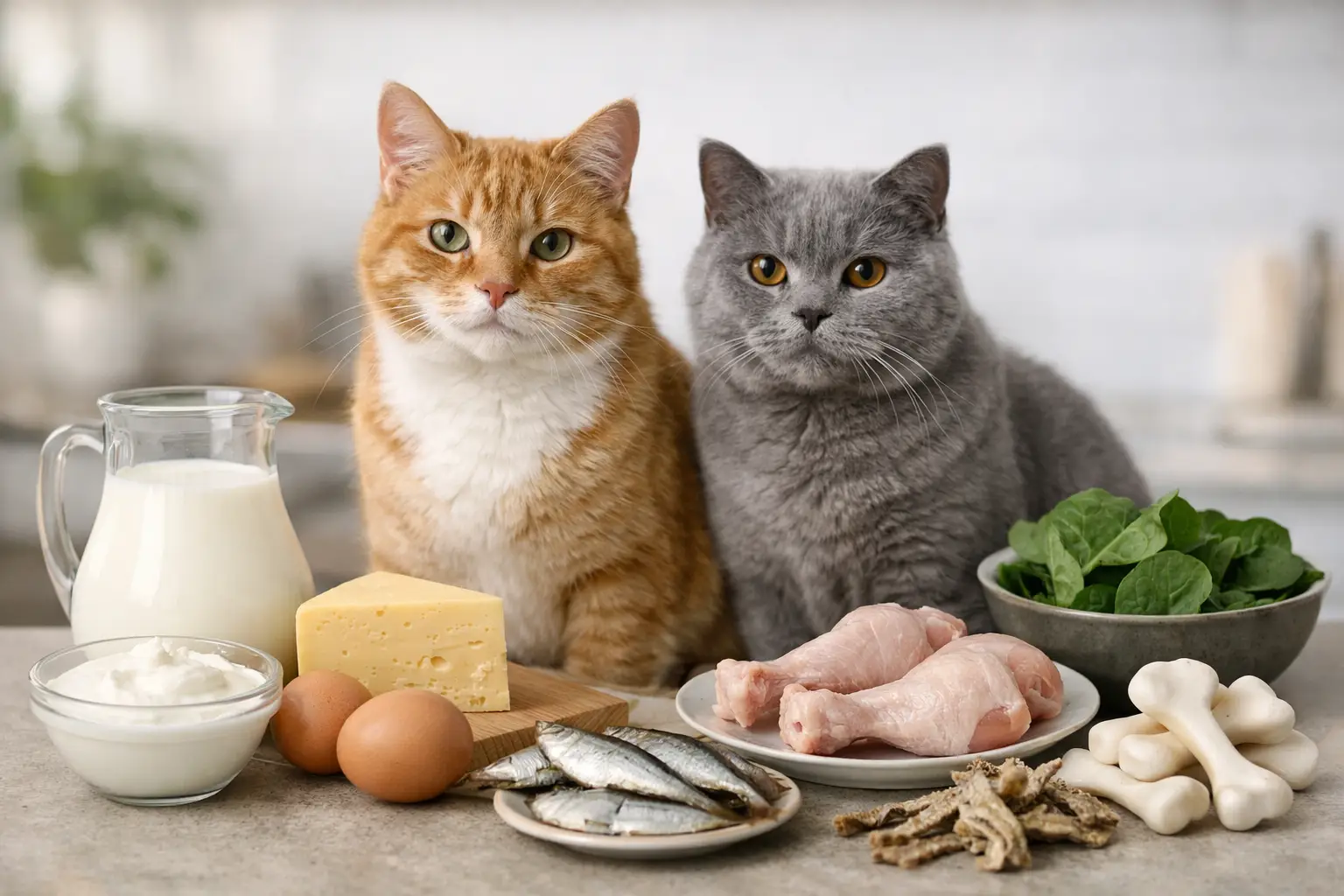
A cat can eat beautiful, fresh muscle meat and still be missing a major part of a complete diet. That is why the best calcium sources for cats are not about tossing in a supplement or offering a splash of milk. They are about supplying calcium in the right form and amount, alongside phosphorus and the other nutrients a carnivore needs.
For raw feeders, calcium is one of the details that separates a properly formulated meal from a meat-only diet. Cats need it for bones and teeth, of course, but also for normal muscle contraction, nerve function, blood clotting, and healthy cell activity. Getting it wrong over time can have real consequences, especially for growing kittens.
Why Calcium Balance Matters More Than a Single Ingredient
Meat is naturally high in phosphorus and comparatively low in calcium. A boneless chicken thigh, beef heart, or turkey meat meal may be an excellent protein source, but it does not provide the calcium needed to balance its phosphorus content. Feeding a boneless meat diet without a planned calcium source can pull calcium from the cat’s own bones to help maintain normal blood levels.
The goal is not simply to add as much calcium as possible. Too much can be just as problematic as too little. An excess may interfere with the absorption of other minerals, while an incorrect calcium-to-phosphorus ratio can affect skeletal development in kittens and long-term health in adult cats.
A complete feline diet is built around balance. That includes protein, fat, taurine, essential fatty acids, vitamins, trace minerals, and a properly calculated calcium-to-phosphorus ratio. This is why measured formulation matters more than internet shortcuts.
The Best Calcium Sources for Cats on a Raw Diet
For most cats eating raw meals, edible bone or a precisely measured calcium supplement are the most practical and reliable paths. Which one is right depends on the recipe, the cat, and whether the food is commercially formulated or made at home.
Finely Ground, Raw Edible Bone
Raw edible bone is a natural calcium source for cats because it also supplies phosphorus and other minerals in a form that reflects a prey-based diet. In properly made raw food, the bone is finely ground and incorporated throughout the meal. Common examples include poultry bones from chicken, turkey, duck, or rabbit.
This is not the same as handing a cat a bone from the kitchen. Whole bones can present choking and dental risks, and cooked bones are never appropriate. Cooking makes bones brittle, raising the risk of splintering and internal injury.
Finely ground raw bone can work well in complete recipes because it contributes both calcium and phosphorus together. Still, the amount has to be controlled. A meal with too much bone can lead to dry, hard stools or constipation. Pale, crumbly stool is often a practical sign that the bone content may be too high, although any ongoing digestive issue deserves attention.
Eggshell Calcium
Eggshell is primarily calcium carbonate. When it is cleaned, fully dried, finely ground, and measured accurately, it can be used to balance boneless meat in a home-prepared recipe. It is especially useful for cats that do not tolerate bone well or for recipes designed around boneless meat.
The trade-off is straightforward: eggshell provides calcium but very little phosphorus. That means it is not a casual substitute for bone in every recipe. It must be used in a recipe that accounts for this difference and supplies all other necessary nutrients. Measuring with a consistent, tested recipe is far safer than estimating with a pinch or spoonful.
Food-Grade Calcium Carbonate
Food-grade calcium carbonate is another useful option in formulated homemade meals. Like eggshell, it supplies calcium without meaningful phosphorus. It can be easier to measure consistently than homemade eggshell powder, provided the product is plain and intended for dietary use.
Do not use antacids, flavored powders, or human supplements with added vitamins, sweeteners, herbs, or other active ingredients as a shortcut. Cats are small, and ingredient extras that seem harmless to people may not belong in their food.
Commercially Formulated Complete Cat Food
For owners who want the benefits of raw feeding without personally calculating mineral levels, a complete and balanced commercial feline recipe is often the most dependable choice. A properly formulated raw cat food uses a planned calcium source at a level designed to work with the recipe’s meat, organs, and other ingredients.
At Chew Dat Foods, we believe raw feeding should be practical as well as nutrient-dense. A ready-to-eat meal removes the guesswork of trying to balance calcium around every protein change at home. That matters when feeding cats, because small daily errors add up faster than many owners realize.
Calcium Sources That Sound Helpful but Usually Are Not
Some foods are commonly labeled as calcium-rich, but they do not make reliable foundations for a cat’s diet.
Dairy is the classic example. Milk, cheese, and yogurt contain calcium, but many adult cats digest lactose poorly. Even lactose-free dairy can add unnecessary fat and calories, and it does not solve the need to balance a meat-based diet. It is a treat question, not a complete-diet solution.
Canned fish with soft bones, such as sardines, can contain calcium. But sardines are not a balanced daily calcium plan for cats. They can be high in sodium depending on the product, and regular fish-heavy feeding brings its own nutritional considerations. If offered at all, use plain options in small amounts and treat them as an occasional food, not the backbone of the bowl.
Organ meats are highly nutritious, but they are not a calcium replacement. Liver is particularly rich in vitamin A, which means overfeeding it can create another imbalance. Heart supplies valuable taurine and protein, while secreting organs contribute key vitamins and minerals. Each has a place in a well-built recipe, but none replaces a planned calcium source.
Kittens, Senior Cats, and Cats With Medical Needs
Kittens have no room for rough estimates. Their bones are developing quickly, so both calcium amount and calcium-to-phosphorus balance need to be correct. A kitten should eat a diet formulated specifically for growth or all life stages, not an adult maintenance recipe adjusted by guesswork.
Senior cats may also need an individualized plan, particularly if they have kidney disease, urinary issues, constipation, or reduced appetite. Cats with kidney disease often require careful phosphorus management, and adding bone or calcium on your own can complicate that plan. A veterinarian familiar with feline nutrition should guide dietary changes for any cat with a diagnosed health condition.
The same applies to pregnant or nursing cats. Their nutritional demands are higher, and a complete growth or reproduction-appropriate diet is the responsible choice.
A Practical Way to Choose the Right Source
If you buy a complete commercial raw cat food, check that it is intended as a complete daily diet for cats, not a supplemental topper. Follow the feeding guidance, keep food refrigerated or frozen as directed, and avoid adding extra bone, eggshell, or calcium powder unless the recipe developer or your veterinarian tells you to do so.
If you prepare food at home, start with a feline-specific recipe from a qualified veterinary nutrition professional or a proven formulation source. Weigh ingredients with a kitchen scale. Use the exact calcium source and amount specified, because substituting bone for eggshell or changing proteins can alter the mineral balance.
A healthy cat’s food does not need to be complicated, but it does need to be complete. The best approach is the one you can follow consistently: measured ingredients, safe food handling, and a diet designed for cats rather than adapted from a dog recipe or a human meal.
Your cat depends on you to make the bowl make sense. Choose calcium as part of a complete plan, and you are supporting more than strong bones – you are giving every meal a sound nutritional foundation.
Leave a Reply