

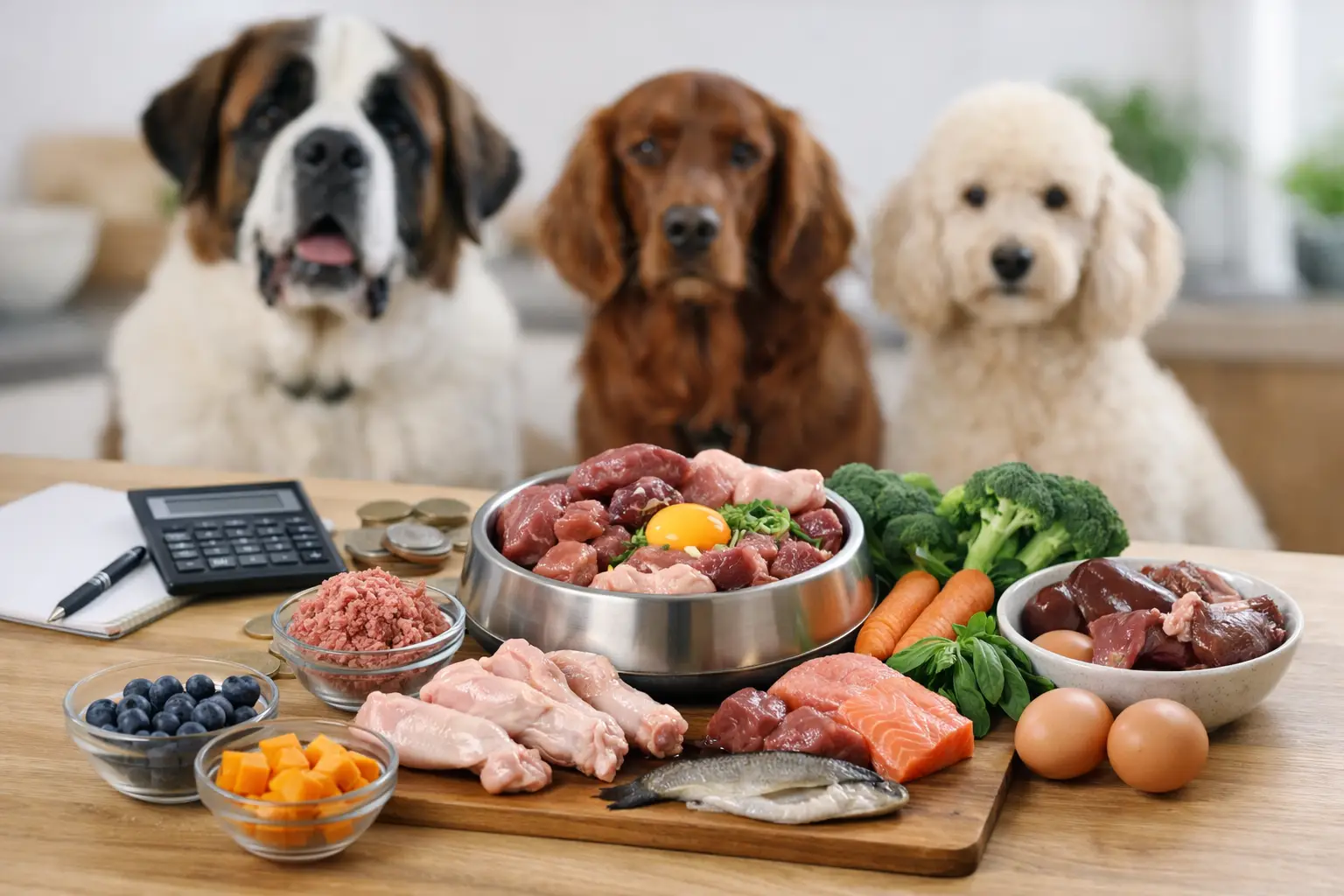
Raw feeding does not have to mean surprise expenses, wasted freezer space, or a cart full of ingredients you cannot use. This guide to raw food budgeting starts with the part that matters most: knowing what your pet needs each day, then building a buying routine that protects both their nutrition and your household budget.
For many pet owners, the cost question comes before the switch. That is fair. A raw diet should be built around properly balanced meals, safe handling, and consistent portions – not bargain hunting at the expense of your dog’s or cat’s health. The good news is that thoughtful planning can make quality raw feeding far more predictable than it looks from the outside.
Start With the Daily Feeding Cost
The easiest way to budget raw food is to stop thinking only in bags, tubs, or boxes. Think in daily portions. Your monthly cost is simply your pet’s average daily amount multiplied by the number of days you need to feed.
For adult dogs, daily intake is often based on a percentage of body weight, activity level, age, body condition, and the calorie density of the food. Puppies, highly active dogs, seniors, and dogs working toward a healthier weight may need a different amount. Cats have their own nutritional needs and should be fed a complete diet made specifically for cats.
Use the feeding guidance for the specific product as your starting point, then watch your pet. A healthy body condition, steady energy, normal stools, and consistent weight tell you more than a one-size-fits-all chart ever can. If your pet has a medical condition, is pregnant, growing, or needs a therapeutic diet, get individualized guidance from your veterinarian before making changes.
Once you know the daily amount, calculate your baseline:
Daily portion x price per pound x 30 days = estimated monthly food cost.
For example, if a dog eats 1 pound per day and the food costs $4 per pound, the monthly food budget is about $120. If your dog eats 1.5 pounds per day, plan for about $180. This simple number gives you a real comparison point against kibble, canned food, treats, supplements, and the frequent last-minute store runs that can quietly add up.
Budget for Complete Nutrition, Not Just Cheap Protein
The lowest price per pound is not always the lowest cost to feed. A meal made from random meat, organs, and bones may look economical, but balancing it correctly requires knowledge, careful sourcing, preparation time, freezer room, and often supplements. Mistakes can become expensive quickly, especially when a pet develops digestive trouble or nutritional gaps.
Ready-to-eat raw meals cost more than a single bulk cut of meat because they include formulation, balanced ingredients, food safety controls, production labor, and packaging. What you are buying is not just protein. You are buying a meal intended to be fed consistently.
That does not mean every pet owner needs the most expensive option available. It means comparing like with like. Ask whether the food is complete and balanced for the life stage it is intended for, what ingredients are used, how it is stored, and how much your pet actually needs to eat. A nutrient-dense food may require a smaller portion than a lower-calorie product, depending on the formula and your pet.
Treats deserve a place in the budget, too. If treats are frequent, they should not be an invisible second diet. Set aside a specific monthly amount for training rewards, chews, and toppers. Better yet, use a small portion of your pet’s regular food for training when practical. It keeps calories and spending easier to control.
Build a Raw Food Budget Around Your Real Routine
A workable plan has to fit your schedule. Buying food in a quantity that looks like a deal does not help if it crowds out your freezer, gets forgotten, or creates pressure to overfeed before it expires.
Start with a two- to four-week supply. That is usually long enough to reduce the stress of frequent ordering while still letting you see how your pet is doing on the food. Once you know your pet’s daily portion and your storage capacity, you can decide whether a larger order actually saves money.
For homes feeding more than one pet, combine the household total rather than budgeting pet by pet in separate mental buckets. A 60-pound dog, a 20-pound dog, and two cats can use a meaningful amount of food each month. Knowing the total pounds needed before an ordering deadline makes it easier to choose the right size order and avoid emergency purchases.
Scheduled pickup and coordinated delivery can be part of the savings plan. They reduce the retail overhead and rushed shopping that often push pet food costs higher. Chew Dat Foods uses a co-op style pickup and delivery approach for this reason: production can be planned, meals stay fresh, and customers can buy premium raw food without paying for a traditional retail shelf model.
The trade-off is simple: you have to plan ahead. Put ordering deadlines, pickup dates, and thawing reminders on your calendar. A little discipline is what turns raw feeding from an expensive scramble into a steady household routine.
Cut Waste Before You Cut Quality
Food waste is one of the fastest ways to make raw feeding feel unaffordable. Most waste comes from poor portioning, improper thawing, forgotten freezer inventory, or buying proteins a pet will not eat.
Portion meals according to your pet’s actual needs. If a package contains multiple days of food, divide it into daily or two-day containers before thawing. Label containers with the date and protein. This is especially useful in multi-pet homes, where it is easy to thaw food intended for the wrong animal or lose track of what should be used first.
Use a first-in, first-out freezer system. Put new food behind older food, and keep a simple note on the freezer door with the number of meals or pounds remaining. You do not need a complicated spreadsheet. You need a clear answer when you ask, “How much food do we have left?”
Reusable containers can also make a measurable difference over time. Returning clean containers reduces packaging waste and supports a system designed to keep costs under control. Just follow the return instructions closely. A container program only works when customers return containers clean, dry, and on schedule.
Variety can be valuable, but too much variety at once can create waste. Introduce new proteins gradually, particularly for pets with sensitive stomachs. Keep one or two proteins your pet does well on as the foundation, then rotate thoughtfully rather than opening several packages at the same time.
Make Room for Transition Costs
The first month of raw feeding may cost more than your long-term average. You may need freezer containers, a kitchen scale, a designated thawing area, or an extra order while you learn your pet’s preferred portions. That is normal. Treat these as setup costs, not proof that raw feeding is out of reach.
A gradual transition may also mean temporarily buying both old food and new food. Do not rush that process just to save a few dollars. Sudden diet changes can cause digestive upset, and then you may spend more on replacement food or unnecessary stress. Follow transition guidance, monitor stools and appetite, and adjust at a sensible pace for your pet.
Keep a small reserve in your budget for the unexpected. Travel, a missed pickup, a power outage, or a change in your dog’s activity level can affect the plan. Having a few days of properly stored backup food prevents a stressful decision when your freezer is low.
Review the Budget With Your Pet’s Results in Mind
A raw food budget should be reviewed after the first month, then every few months. Check the actual pounds used, what is left in the freezer, how much you spent on extras, and whether your pet’s portion needs adjustment.
Also pay attention to the outcomes that motivated the change in the first place. Many owners look for steadier energy, a shinier coat, cleaner teeth and gums, smaller stools, or better overall vitality. Results vary by pet, and food is only one part of health, but those practical observations help you decide whether your feeding plan is working.
If costs are higher than expected, do not automatically reduce portions or switch to an incomplete option. First check for overfeeding, treat creep, food waste, storage problems, and missed ordering windows. Often, the budget problem is operational rather than nutritional.
The best raw feeding budget is not the one with the smallest number on paper. It is the one you can maintain month after month while feeding a complete, quality diet and giving your pet the consistency they deserve.
Leave a Reply