

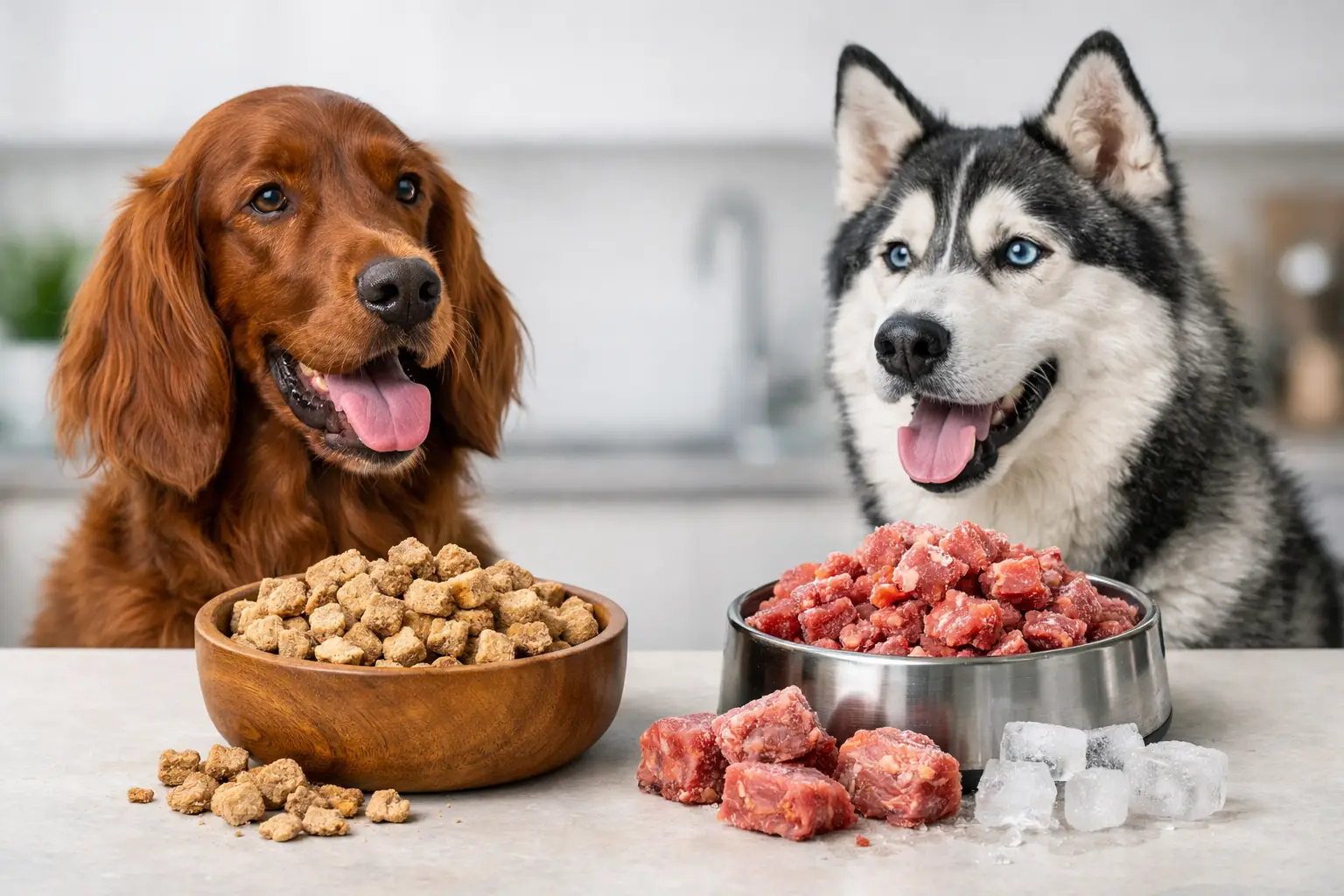
A bag of freeze-dried nuggets can look a lot like a raw meal at first glance. Both may feature meat-forward ingredients and avoid the heavy processing of conventional kibble. But in the freeze dried raw vs frozen raw decision, the biggest difference is not the label claim. It is the moisture, handling, cost, and day-to-day feeding experience behind the food.
For families who want real-food nutrition without guesswork, frozen raw is often the closer match to the fresh meals they picture. Freeze-dried raw has a useful place, especially for travel and backup feeding. The right choice depends on your pet, your budget, your storage space, and whether the food is meant to be a full-time meal or a convenience option.
What Separates Freeze-Dried Raw From Frozen Raw
Both foods begin with raw ingredients. Freeze-dried raw is frozen and placed under conditions that remove most of its water through sublimation. What remains is lightweight, shelf-stable food that can be fed dry or rehydrated with water.
Frozen raw stays frozen from production until it reaches your freezer. It retains the natural moisture found in fresh meat, organs, and other ingredients. A properly formulated frozen raw meal is ready to thaw and serve, without needing water added to bring it back to a meal-like consistency.
That difference in water content changes nearly everything about the feeding experience. It affects hydration, package size, price per meal, storage needs, texture, and how a pet responds to the food.
Freeze Dried Raw vs Frozen Raw Nutrition
Moisture matters more than most labels suggest
Dogs and cats are built to get meaningful hydration from food. This is especially relevant for cats, which often have a low natural thirst drive. Frozen raw meals contain substantial moisture, helping support the hydration profile of a fresh, meat-based diet.
Freeze-dried raw contains very little moisture until you add it back. Feeding it dry is convenient, but it does not offer the same hydration benefit as a frozen raw meal. Rehydrating freeze-dried food can narrow that gap, but the pet owner has to consistently add enough water and give the food time to absorb it.
Some dogs happily eat dry freeze-dried pieces. Others gulp them down, drink little afterward, and may not get the moisture they need from the meal. For pets that do better with wet food, frozen raw is usually the more dependable option.
Ingredients and formulation still come first
Neither format automatically means better ingredients. A freeze-dried recipe can be thoughtfully made, just as a frozen recipe can be poorly balanced. Look beyond the front of the package and ask practical questions: Is the food complete and balanced for the pet’s life stage? Are muscle meat, organ meat, and appropriate nutrient sources included in intentional amounts? Can the company clearly explain what is in the food and where it comes from?
A meal made primarily from human-grade, recognizable ingredients gives pet owners a clearer starting point than a vague ingredient panel filled with unnamed animal meals or unnecessary fillers. For long-term feeding, balance is not optional. A bowl of plain raw meat is not a complete diet for a dog or cat, no matter which preservation method is used.
Processing is different, but not a simple good-versus-bad question
Freeze-drying is a preservation process. It can help retain much of the food’s structure and nutrients while making it shelf-stable. Frozen raw is less altered after preparation because it is preserved by freezing rather than dehydration.
That does not mean every frozen food is superior in every circumstance. Freeze-dried raw is useful when freezer access is limited, when a family is traveling, or when a pet needs a familiar food in an emergency kit. The better question is whether the format supports consistent, balanced feeding for your household.
Daily Feeding: Convenience Has Two Meanings
Freeze-dried raw wins on pantry storage. It is light, portable, and easy to keep on hand. You do not need freezer room, and unopened packages generally have a longer shelf life. That can be a real advantage for road trips, camping, pet sitters, or households that need a practical backup food.
Frozen raw wins on meal experience. A thawed portion is already moist and naturally satisfying for many pets. It is especially practical for owners who batch-thaw several days of meals, portion food in advance, and follow a regular feeding routine. There is planning involved, but it is simple planning: move the next container from freezer to refrigerator before you need it.
Frozen raw also tends to work well for pets that prefer a true meal texture over crunchy pieces. Older pets, picky eaters, and animals with dental discomfort may find a soft, moist meal easier to manage. Of course, every pet is an individual. Some dogs enjoy either format without hesitation.
Cost: Compare Food Fed, Not Package Price
Freeze-dried raw often looks easier to buy because the package is smaller and shelf-ready. But removing water concentrates the food and increases the cost of processing, packaging, and shipping per pound. A bag may contain fewer actual meals than a first glance suggests.
To compare fairly, check the feeding instructions and calculate the cost per day for your pet’s weight. Then consider whether you will need to add water, broth, toppers, or other foods to make the meal satisfying and properly hydrated. Freeze-dried raw can become expensive quickly for large dogs or multi-pet homes.
Frozen raw requires freezer space and cold-chain handling, but it can offer stronger day-to-day value when purchased in larger quantities or through scheduled local pickup. Chew Dat Foods uses small-batch production, planned delivery coordination, and reusable containers to keep high-quality frozen raw more accessible for committed pet families. The system requires customers to order on schedule and return containers, but that discipline helps reduce waste and avoid the costs of disposable packaging.
Handling and Safety Are Part of Responsible Raw Feeding
Raw food, whether frozen or freeze-dried, deserves careful handling. Freezing does not sterilize food, and freeze-drying does not remove the need for good hygiene. Wash hands after handling meals, clean bowls and prep surfaces, and keep raw food away from foods intended for people.
Thaw frozen meals in the refrigerator, not on the counter. Serve what your pet will eat in a reasonable time, then refrigerate or discard leftovers according to the product’s handling guidance. Do not repeatedly thaw and refreeze food.
For freeze-dried raw, keep the package sealed and dry. If you rehydrate it, treat it like fresh food. Refrigerate unused portions and do not leave a wet raw meal sitting out all day. Households with very young children, elderly family members, pregnant people, or immunocompromised individuals should talk with their veterinarian and use especially careful food-handling practices.
Which Format Fits Your Pet?
Frozen raw is usually the better everyday choice if your priorities are hydration, fresh-food texture, and feeding a consistently moist meal. It is particularly worth considering for cats, pets that do not drink much water, picky eaters, and families feeding multiple animals where daily cost matters.
Freeze-dried raw may be the better fit if travel, limited freezer space, or emergency storage is the deciding factor. It can also be a practical option for occasional meals, training rewards when used appropriately, or a short-term backup when your normal frozen supply is unavailable.
There is no rule that says you must choose only one format forever. Many pet owners use frozen raw as the foundation of their feeding plan and keep freeze-dried raw for trips or unexpected schedule changes. If you do use both, introduce any new recipe gradually and watch your pet’s stool quality, appetite, energy, skin, and coat.
The best raw food is not the one with the most impressive marketing language. It is the one your pet tolerates well, that meets complete-and-balanced nutritional needs, and that your household can handle safely and afford consistently. Choose the format that makes real-food feeding sustainable on ordinary weekdays, not just appealing on the day you bring it home.
Leave a Reply