

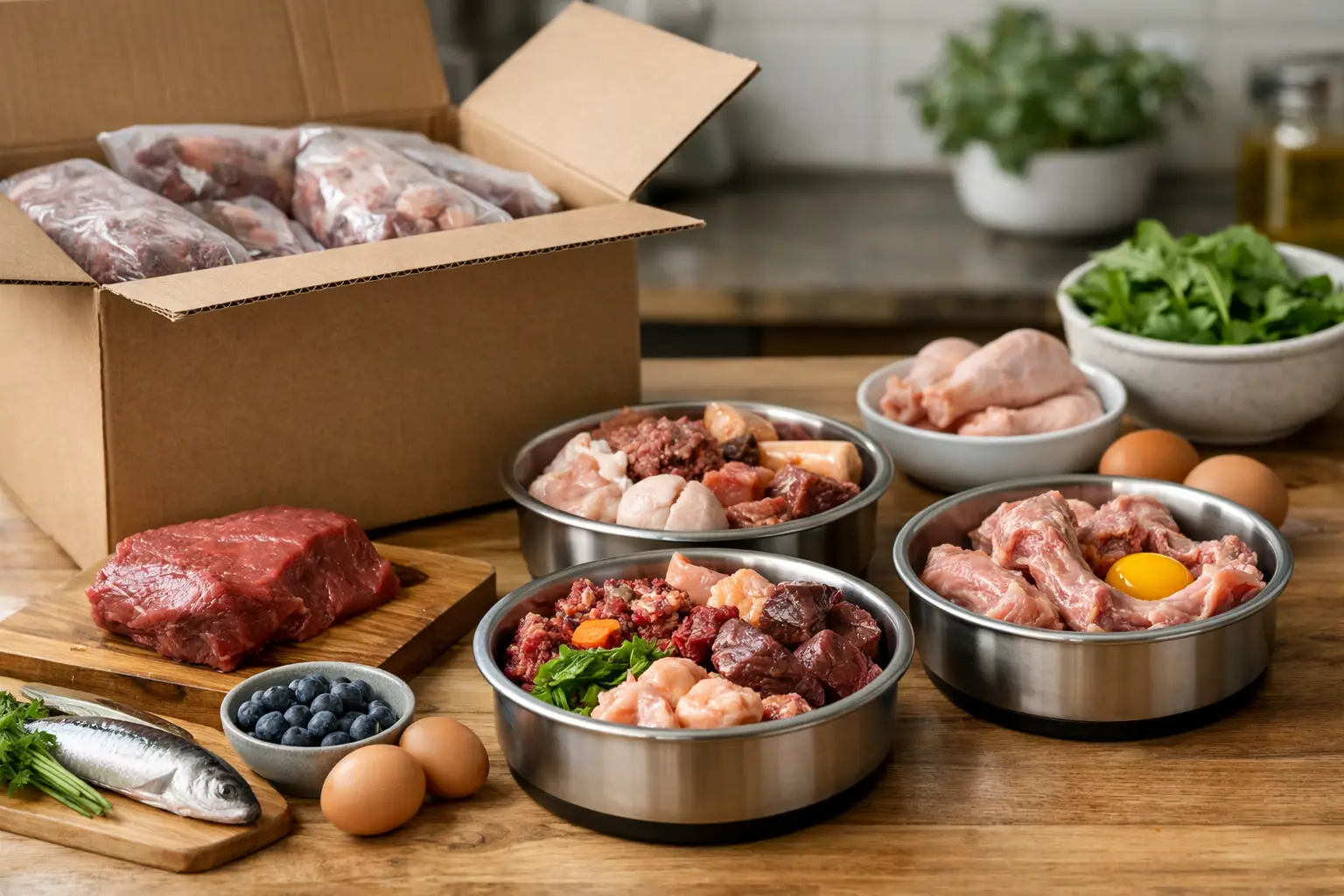
Most pet owners do not struggle with whether raw feeding matters. They struggle with the process. They want better food, cleaner ingredients, and visible results, but they do not want to guess their way through ordering. If you are trying to figure out how to order local raw pet food, the real goal is simple: get fresh, balanced meals from a source you trust, in a system you can stick with.
That means looking beyond a pretty label. Local raw pet food only works well when the nutrition is consistent, the sourcing is transparent, and the ordering process is organized enough to keep product fresh and pricing reasonable. A good local supplier should make raw feeding more practical, not more confusing.
What matters before you order
The first thing to check is whether the food is actually built for regular feeding, not just marketed as raw. There is a difference between a bag of ground meat and a ready-to-eat raw meal. If you are feeding daily, you need balanced nutrition with the right mix of muscle meat, organ content, and bone or another appropriate calcium source, depending on the formula and the species.
This is where some buyers get tripped up. They assume local means better by default. Sometimes it does. Sometimes it just means smaller scale. What matters is whether the company can clearly explain what is in the food, where it comes from, and how it is portioned and handled.
You should also be realistic about your own routine. Ordering local raw pet food often works differently than grabbing kibble off a shelf. Many small-batch producers use scheduled production, pickup windows, route-based delivery, or co-op style distribution. That structure is not a downside. In many cases, it is exactly how a company keeps ingredients fresh, reduces waste, and avoids the markup that comes with traditional retail.
How to order local raw pet food without guesswork
Start with the food itself. Ask what proteins are available, whether the meals are complete and balanced for dogs or cats, and how the ingredients are sourced. Human-grade, locally sourced ingredients matter because they tell you something about quality standards and transparency. A company should be able to tell you what you are feeding your pet in plain language.
Next, figure out how much food your pet actually needs. This is one of the biggest mistakes people make when they first order raw. They either under-order and run out, or over-order and fill the freezer with more than they can manage. Feeding amounts depend on your pet’s weight, activity level, age, and body condition. Puppies, kittens, highly active dogs, and underweight pets usually need a different feeding plan than a sedentary adult.
If the company gives clear feeding guidance, that is a good sign. If they only sell by the pound and leave you to do all the math alone, you may end up wasting money or feeding inconsistently.
Once you know your pet’s estimated portions, pay attention to the ordering schedule. Many local raw food businesses produce in small batches and coordinate pickup or delivery on set days. That means you may need to order ahead rather than waiting until you are down to your last meal. Planning ahead is part of making local raw feeding affordable and reliable.
Choosing the right local supplier
A good supplier should be easy to understand. You should know what you are ordering, when it will be ready, how it will be packed, and what is expected of you.
That sounds obvious, but it matters. Some raw feeding companies focus heavily on lifestyle branding and not enough on operations. If pickup instructions are vague, if deadlines are inconsistent, or if communication is poor, the burden shifts to the customer. That gets old fast.
The better local model is straightforward. You place your order online, select the right quantity, choose the available pickup or delivery option, and follow the posted schedule. If the company uses group drop locations or co-op style pickups, that can be a real advantage. It cuts overhead, keeps routes efficient, and helps preserve product quality without forcing customers to pay inflated shipping costs.
For pet owners in parts of Tennessee, Virginia, and Maryland, this kind of system often makes premium raw feeding more accessible than people expect. It rewards planning, but it can lower packaging and transportation costs compared with boxed nationwide shipping.
Questions worth asking before your first order
You do not need a long checklist, but you do need a few clear answers. Ask whether the meals are ready to feed or if supplements need to be added. Ask how the food should be stored and thawed. Ask how often orders open and close. Ask what happens if you miss a pickup window.
If the company uses reusable containers, ask how returns work. This is one of those details that tells you a lot about the business. A reusable container program can reduce waste and help keep costs down, but only if customers participate responsibly. It is practical, not decorative. If you are ordering from a company that relies on this system, be prepared to return containers on schedule and keep them in good condition.
You should also ask how variety is handled. Some pets do well rotating proteins. Others need a slower transition, especially if they have digestive sensitivity. A supplier with real experience should be able to explain the trade-off. More variety can support broader nutrient exposure and keep meals interesting, but sudden changes can be rough on some pets.
The logistics side of raw feeding matters
A lot of people talk about raw feeding as if the only thing that matters is ingredients. Ingredients matter most, but logistics matter more than people admit. Fresh food requires disciplined handling. That includes freezing, thawing, portioning, and ordering on time.
Before placing your first order, make sure you actually have freezer space. If you are ordering a month’s worth of food for a large dog or multiple pets, that volume adds up quickly. It is better to order a realistic amount and build a routine than to overcommit on the first round.
Think through your weekly feeding habits too. If you work long hours or travel often, pre-portioned meals may be worth more to you than buying in bulk. If you are feeding multiple dogs, a supplier that offers clearly labeled, consistent packaging will save time every day. Convenience is not a luxury when it helps you feed correctly.
How to order local raw pet food for a smooth transition
If your pet is coming from kibble or canned food, do not treat the first order like a grand experiment. Start with enough food to transition properly, but not so much that you are stuck if your pet needs a different protein or feeding amount.
For many pets, a gradual shift works best. Some transition quickly. Others need more time, especially older pets or animals with a history of digestive issues. This is one of those areas where rigid rules are less helpful than close observation. Stool quality, appetite, energy, and body condition tell you more than internet debates ever will.
It also helps to choose a supplier that values consistency over hype. You do not need exotic ingredients to feed well. You need dependable sourcing, sound formulation, and a process you can repeat month after month.
That is one reason family-run companies with hands-on experience can be a strong fit for raw feeders. When the people making the food also care deeply about practical distribution, customer communication, and long-term affordability, the entire system tends to work better. Chew Dat Foods is built around that kind of discipline, from small-batch production to coordinated pickup and reusable packaging.
What a good ordering experience should feel like
By the time you place an order, you should feel clear on four things: what is in the food, how much to buy, when you will receive it, and what your role is in the process. If any of those are fuzzy, stop and ask before spending money.
The best local raw pet food ordering systems are not flashy. They are dependable. They give you quality ingredients, honest instructions, and a repeatable routine that supports your pet’s health without creating chaos for your schedule.
That is the standard worth looking for. When the food is balanced, the sourcing is transparent, and the ordering process respects both freshness and affordability, feeding your dog or cat better becomes a habit instead of a hassle.
A healthier bowl starts with a simple decision: order from people who take the food seriously and expect the same from the process.
Leave a Reply