

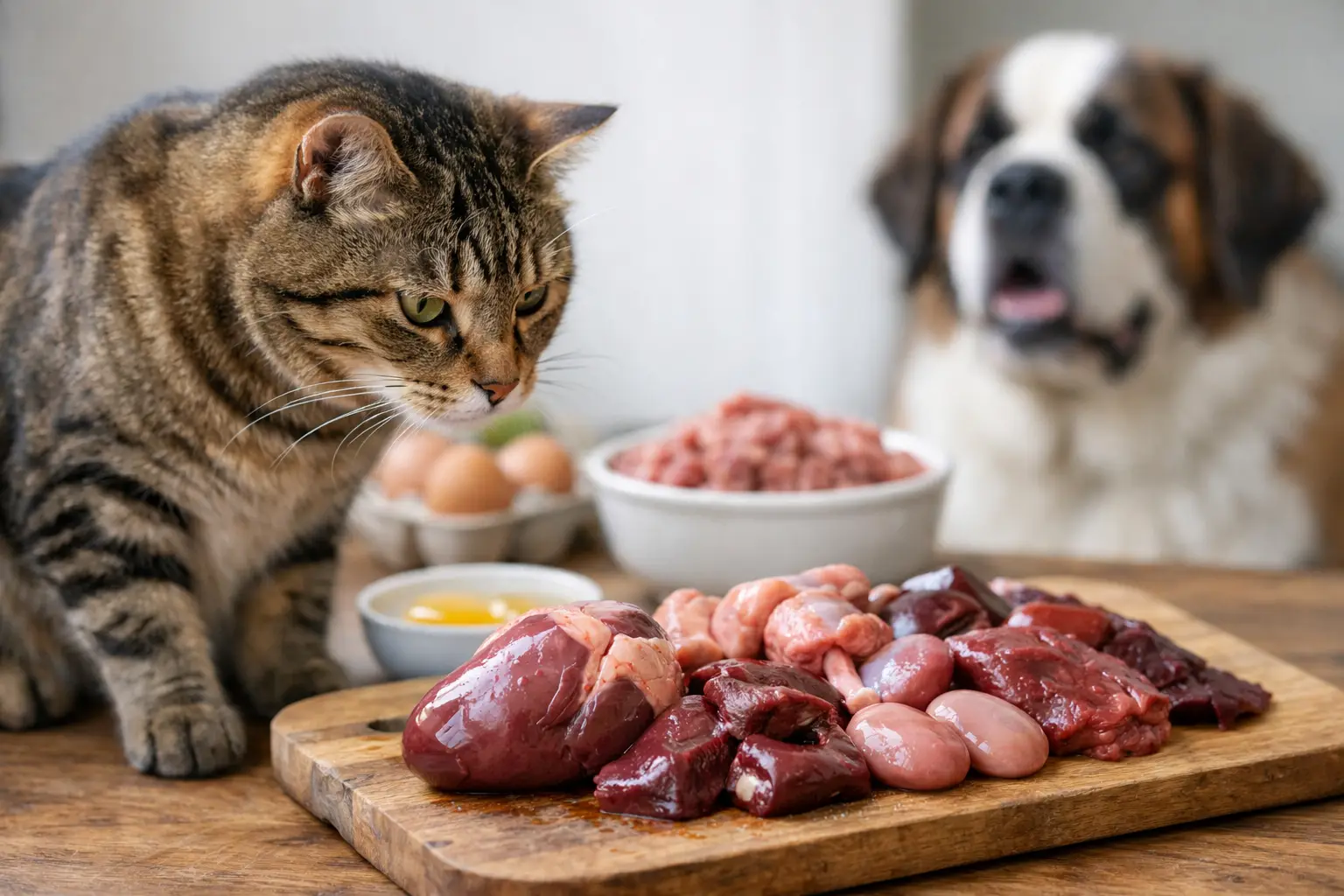
A cat will usually tell you exactly how it feels about organs: one eager bite, then a demand for more. But can cats eat organs safely as part of a raw diet? Yes. In the right amounts and as part of a complete, balanced meal, organs are some of the most nutrient-dense foods a cat can eat. The key is balance. A bowl of liver is not a complete diet, and neither is plain muscle meat.
Cats are obligate carnivores. Their bodies are built to use animal-based protein and fat, and the tissues of prey animals provide nutrients that plant ingredients cannot replace easily. Organs belong in a thoughtfully made feline diet because they supply vitamins, minerals, fatty acids, and amino acids in forms cats are designed to use.
Can Cats Eat Organs in a Raw Diet?
Yes, cats can eat organs, including liver, kidney, spleen, pancreas, and brain. These are often called secreting organs because they perform functions beyond simply moving the body. They are nutritionally different from muscle meat, which is why they should not be treated as interchangeable ingredients.
A properly formulated raw meal uses organs in controlled proportions. That matters because organs are powerful foods. They add critical nutrients, but too much of one organ can create an imbalance just as surely as too little can.
Heart deserves its own clarification. Although many people group it with organs at the grocery store, heart is nutritionally considered muscle meat. It is especially valuable for cats because it naturally contains taurine, an amino acid cats must get from animal foods. Taurine supports normal heart function, vision, reproduction, and nervous system health. Heart is an excellent addition to a feline diet, but it does not replace liver or other secreting organs.
What Each Organ Brings to the Bowl
Liver is usually the first organ raw feeders think of, and for good reason. It is rich in preformed vitamin A, B vitamins, iron, copper, and folate. Cats need vitamin A from animal sources because they cannot efficiently convert plant-based beta-carotene into the active form they need. Liver is a practical way to provide it.
The trade-off is that liver is easy to overfeed. Too much, fed regularly, can supply excessive vitamin A. That is why liver is generally kept to a small portion of a balanced recipe rather than served as a daily main course.
Kidney brings a different nutrient profile, including selenium and several B vitamins. Spleen can contribute iron and other trace nutrients. Pancreas and brain can add their own useful nutritional value, though availability varies by region and supplier. A well-designed recipe commonly uses liver plus another secreting organ so the nutrient load does not rest on liver alone.
Cats can be selective about flavor and texture, especially when an organ is new. Liver has a strong smell, kidney can be more pungent, and some cats need time before they accept them. That is normal. Transition slowly rather than deciding an organ is off-limits after one rejected meal.
How Much Organ Meat Should Cats Eat?
For a homemade raw diet, organ amounts should be based on a complete recipe developed for cats, not guesswork. A commonly used prey-model starting point is around 5% liver and 5% other secreting organ, but a percentage alone does not prove a diet is complete. The meats used, the animal species, the fat level, the bone or calcium source, and any needed supplements all change the final nutrition.
That distinction matters most with cats. They have specific dietary requirements for taurine, calcium, vitamin E, iodine, and other nutrients. Feeding chicken thighs, ground beef, heart, and liver may sound natural, but it can still leave nutritional gaps if the recipe has not been formulated for long-term feeding.
For pet owners who want to feed raw without managing individual organ percentages, a complete ready-to-eat raw cat food is the more practical route. The meal should clearly be intended for cats and formulated to provide balanced daily nutrition, not labeled as a topper, treat, or supplemental food only.
If you are using organs as an occasional topper alongside a complete commercial food, keep the portion modest. Treats and extras should not crowd out the balanced food that supplies the full nutritional foundation. A few small pieces of cooked or raw liver once in a while is very different from making it a regular large part of the bowl.
Raw Organs Need Safe Handling
Human-grade sourcing and careful production standards matter, but raw animal ingredients still require responsible handling at home. Bacteria can be present in raw meat, and cats can shed pathogens even when they appear perfectly healthy. The risk is not only to the cat. It also affects people, other pets, and anyone with a reduced immune system in the household.
Keep raw meals frozen until needed, thaw portions in the refrigerator, and return unused food to the refrigerator promptly. Use a dedicated bowl and wash bowls, utensils, counters, and hands with hot, soapy water after feeding. Do not leave a raw meal sitting out all day for grazing.
Extra caution is wise in homes with infants, elderly family members, pregnant people, or immunocompromised individuals. If your cat has a medical condition, is receiving treatment, or has a history of digestive disease, talk with your veterinarian before changing diets. Raw feeding can be a good fit for many cats, but it is not a one-size-fits-all decision.
Signs Your Cat Is Adjusting Well
A gradual transition gives a cat’s digestive system time to adapt to richer animal foods. Start by mixing a small amount of the new food with the current diet, then increase it over several days or longer based on your cat’s stool quality and appetite. Some cats transition quickly. Others need a slower approach, particularly if they have eaten kibble for years.
Healthy adjustment signs include steady appetite, normal energy, consistent stools, and a coat that remains soft and well kept. Temporary stool changes can happen during a diet change, but repeated vomiting, persistent diarrhea, constipation, lethargy, or refusal to eat deserves attention. Cats should not go without food for extended periods, so a stubborn refusal to transition is a reason to pause and get professional guidance.
It also helps to pay attention to the whole diet rather than crediting one ingredient for every change. Organs support feline nutrition, but the results owners want – healthy skin, a glossy coat, lean body condition, good energy, and reliable litter-box habits – come from a complete feeding plan over time.
When Organs Are Not Enough
The biggest mistake in raw feeding is assuming that natural ingredients automatically equal balanced nutrition. Cats can eat organs, but organs are only one part of the meal. They need an appropriate balance of muscle meat, animal fat, calcium, organ tissue, and targeted nutrients in amounts that meet feline needs.
This is also why dog and cat raw meals should not be used interchangeably. Dogs and cats have different nutritional requirements, and a food that works well for one species may not meet the needs of the other. Choose food made specifically for the animal in front of you.
For families who value ingredient transparency but do not want to source, grind, portion, and calculate every component themselves, balanced raw meals remove much of the uncertainty. At Chew Dat Foods, that means using real, human-grade ingredients in ready-to-eat meals while keeping the focus where it belongs: feeding pets food that is purposeful, not just convenient.
A small amount of the right organ can do more for a cat’s nutrition than a large amount of a trendy add-on. Feed organs with respect for their value, keep the overall diet balanced, and let your cat’s long-term health guide every bowl.
Leave a Reply