

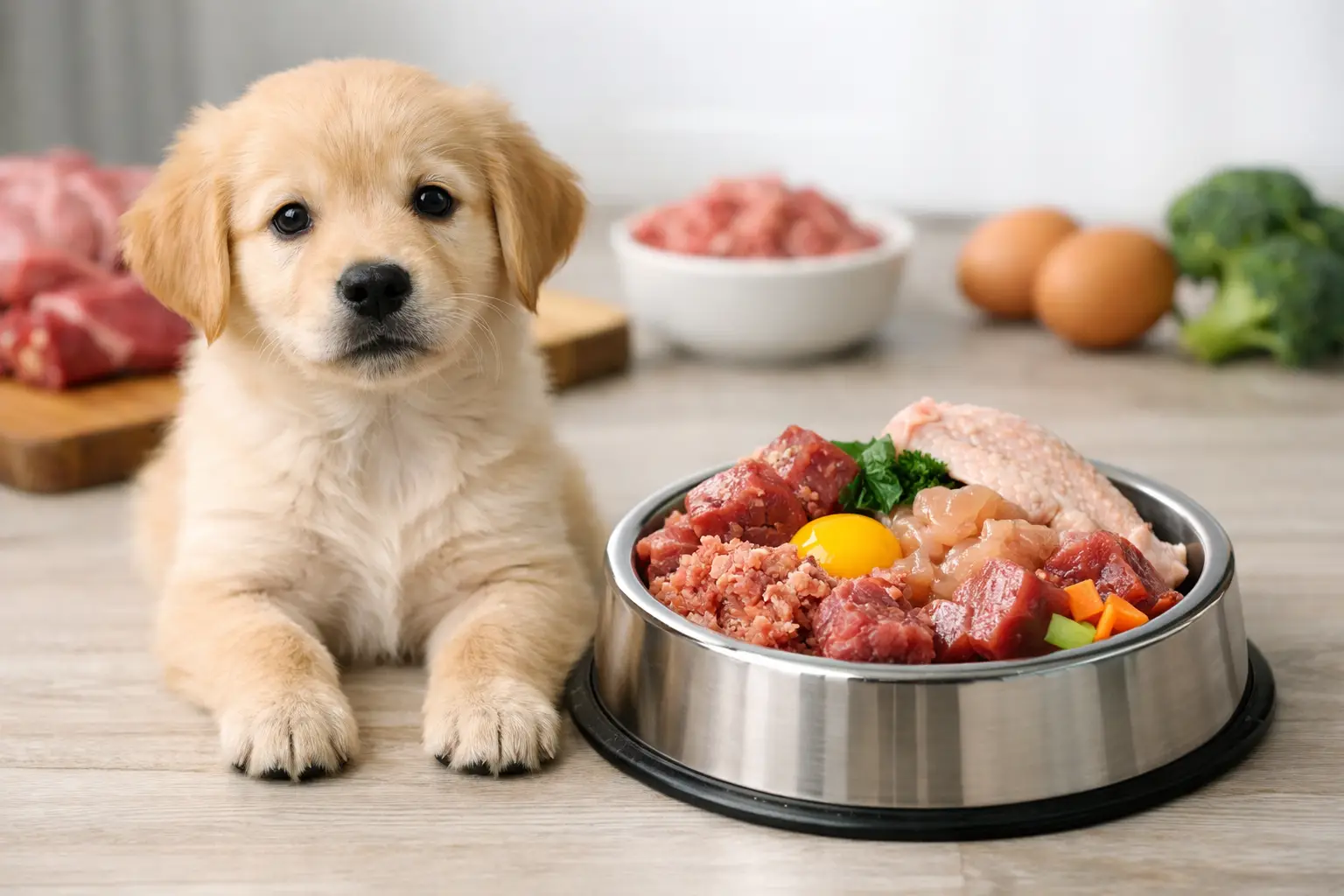
That question usually comes up right after a new puppy proves two things – they are always hungry, and they will try to eat just about anything. So, can puppies eat raw meals? Yes, many puppies can do very well on raw food, but only when the meals are properly balanced for growth and fed with some discipline.
That last part matters more than people think. Puppies are not just small dogs. They are building bone, muscle, connective tissue, teeth, immune function, and a healthy digestive system at the same time. If the food is unbalanced, the mistakes show up faster in a puppy than they often do in an adult dog.
Can Puppies Eat Raw Meals From the Start?
In many cases, yes. Puppies can begin eating raw meals early, especially if the food is complete and balanced for growth. Some breeders and experienced raw feeders start puppies on raw from weaning. Others transition after the puppy comes home. Both approaches can work.
The key is not whether the food is raw. The key is whether the diet is nutritionally complete for a growing dog.
A puppy needs the right ratio of calcium to phosphorus, enough high-quality animal protein, appropriate fat levels, organ content, and a broad range of nutrients that support steady growth. Feeding random chunks of meat alone is not a raw diet. It is just meat. That is where people get into trouble.
When raw feeding is done correctly, many owners report the same practical benefits they were hoping for in the first place – firmer stools, cleaner ingredients, solid muscle tone, healthy skin, shinier coats, and strong enthusiasm at mealtime. But those benefits depend on consistency, not guesswork.
What Makes a Raw Meal Safe for Puppies?
A safe raw meal for a puppy starts with balance. It also depends on sourcing, handling, and portioning.
First, the food has to be formulated for growth, not just maintenance. Adult dogs can sometimes tolerate more variation in the bowl. Puppies do not have that margin. They need steady nutrition every day because their bodies are changing fast.
Second, ingredient quality matters. Human-grade, responsibly sourced ingredients give owners a clearer picture of what their puppy is actually eating. That transparency matters when you are feeding a young dog with a developing immune system and no room for low-quality fillers.
Third, raw food has to be handled like raw food. Keep it frozen or refrigerated as directed, thaw safely, clean bowls and prep surfaces, and do not let food sit out for long stretches. Raw feeding is not difficult, but it does require attention.
Last, portions have to fit the puppy in front of you. Age, breed, current weight, projected adult size, and activity level all affect how much food a puppy needs. A fast-growing large breed puppy should not be fed the same way as a small breed puppy with a very different growth curve.
Why Puppies Need More Than Just Raw Meat
This is where raw feeding gets oversimplified online. People hear “raw” and picture ground beef, chicken backs, or a few organ pieces tossed in a bowl. That is not enough for a growing dog.
Puppies need complete nutrition, not just protein. Calcium is one of the biggest concerns because too little or too much can create growth problems, especially in large breed puppies. The same goes for trace minerals, essential fatty acids, and vitamins that support bone development, brain function, and immune health.
Too much liver, too little bone, poor fat balance, or a diet built from a narrow set of ingredients can all create issues over time. You may not see the problem in a week, but growth does not pause while the diet catches up.
That is why ready-to-eat raw meals can be so useful for puppy owners. They remove a lot of the homemade margin for error. Instead of trying to learn formulation from scratch while house-training a puppy and surviving the teething phase, owners can start with meals that are already built for consistency.
Can Puppies Eat Raw Meals if They Came Home on Kibble?
Yes. A puppy does not have to start life on raw to transition successfully.
Some puppies switch quickly. Others do better with a gradual move over several days. It depends on the dog, the previous diet, and how sensitive their digestion is. If a puppy has had loose stool, stress from travel, recent vaccinations, or a big environmental change, slowing the transition can help.
A practical approach is to start with one protein source and keep everything else stable. Watch stool quality, appetite, energy, and overall comfort. If the puppy is eating well and digesting well, you can continue the transition with more confidence.
This is also a good reminder that not every bump in the road means raw is the problem. Puppies get stressed. They chew things they should not chew. They pick up minor stomach upset from routine life changes. The goal is to look for patterns, not panic over every single soft stool.
Large Breed Puppies Need Extra Attention
If you have a Lab, Shepherd, Dane, Mastiff, or another large breed puppy, raw feeding can still work very well. You just need to be more precise.
Large breed puppies are more sensitive to nutritional imbalance during growth. Overfeeding can be just as problematic as underfeeding. Rapid growth sounds impressive, but steady growth is healthier for joints and skeletal development.
That means portion control matters. Calcium levels matter. Overall energy intake matters. This is not the stage to free-feed or assume a bigger puppy should always get more food just because they act hungry.
A well-made raw meal can support controlled, healthy growth. A poorly planned DIY approach can create avoidable problems.
Signs a Raw Diet Is Working for Your Puppy
The first sign is usually simple – your puppy eats with real enthusiasm and digests the food well. Beyond that, there are a few practical markers owners tend to notice.
Stools are often smaller and firmer. Coat quality may improve. Breath can become less offensive. Some puppies maintain leaner body condition with solid muscle tone instead of the softer look that can come from overfeeding poor-quality food. Energy tends to look more steady rather than spiking and crashing.
Of course, “working” does not mean perfect every day. Puppies still grow in spurts. Appetite can shift. Teething, stress, and routine changes can affect digestion. What you want to see is a generally thriving puppy with good body condition, steady growth, and no persistent digestive or orthopedic concerns.
Common Mistakes When Feeding Raw to Puppies
The biggest mistake is feeding an unbalanced homemade diet and assuming variety will fix it. Variety helps, but it does not automatically create nutritional completeness.
The second mistake is overfeeding. Puppies need enough food to grow, but too much can push unhealthy weight gain, especially in larger breeds.
Another common issue is changing proteins, treats, toppers, and supplements too often. When everything changes at once, it becomes hard to tell what is helping and what is not. Simpler is usually better in the beginning.
Some owners also underestimate the logistics. Raw feeding works best when you can store food properly, follow a schedule, and reorder before you run out. For families using scheduled pickup or coordinated delivery, a little planning keeps the process affordable and consistent. That structure is often a benefit, not a burden, because puppies do best on routine.
So, Can Puppies Eat Raw Meals Long Term?
Yes, they can – if the meals stay balanced and the feeding plan grows with the dog.
What a puppy needs at eight weeks is not exactly what that same dog needs at six months or one year. Portions change. Feeding frequency changes. Calorie needs shift as growth slows and activity changes. The food plan should adapt too.
That is one reason many owners appreciate working with a raw food provider that keeps things straightforward. When the meals are ready to eat, made from quality ingredients, and portioning support is available, raw feeding becomes much more manageable in everyday life. For busy families in places like Knoxville, Winchester, or Frederick who still want better food in the bowl, that practicality matters.
If you are asking whether puppies can eat raw meals, the better question is this: can you feed raw in a way that is balanced, consistent, and realistic for your household? If the answer is yes, a raw diet can be a strong foundation for healthy growth. Start with complete meals, pay attention to the puppy in front of you, and let good nutrition do its job.
Leave a Reply