

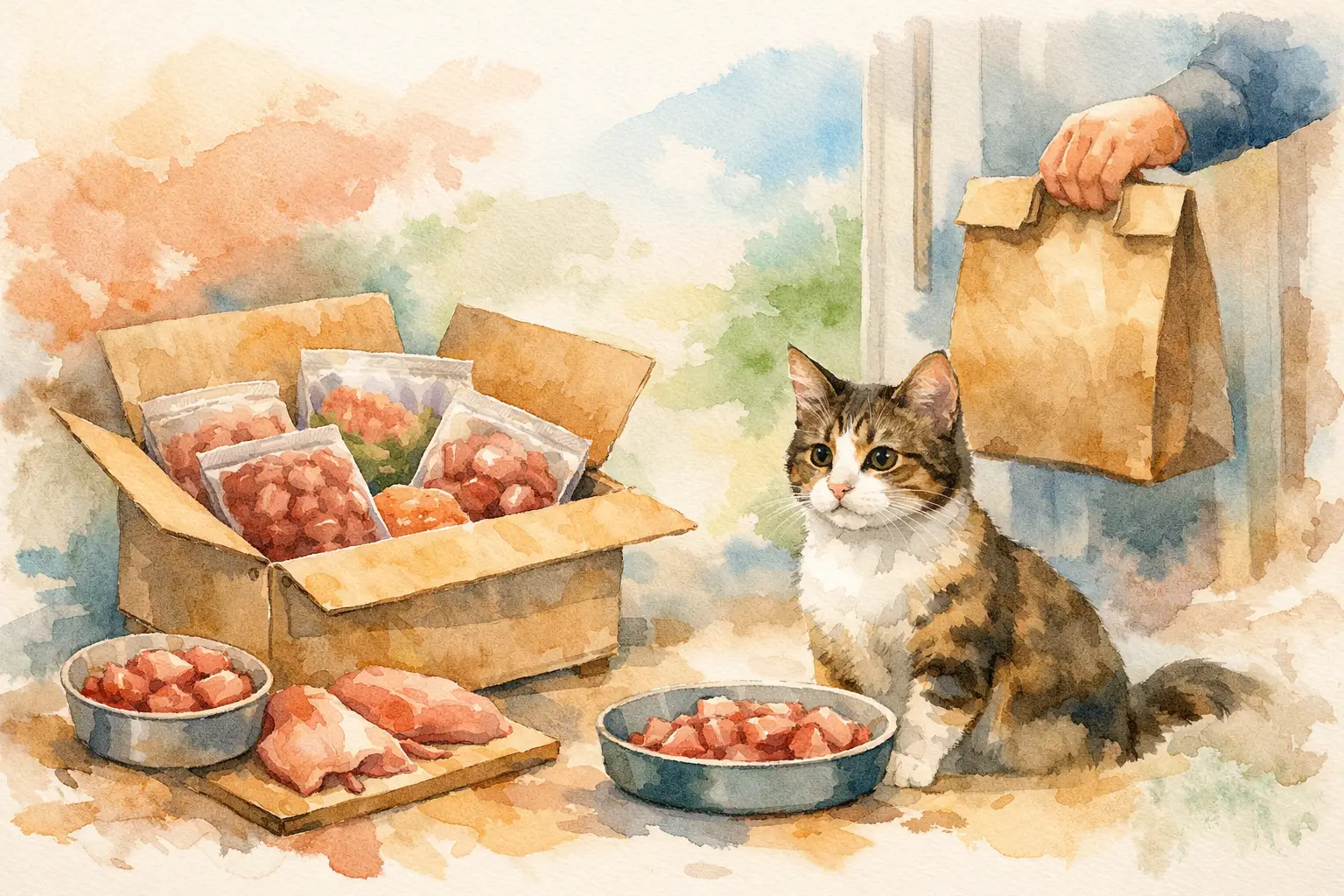
The hardest part of feeding a cat better is usually not motivation. It is consistency. Most cat owners who look into raw feeding are already paying attention to ingredients, moisture, digestion, and coat quality. What stops them is the day-to-day reality of sourcing meat, balancing meals correctly, portioning, storing, and making sure they do not run out. That is where raw cat food delivery starts to make sense.
Not every delivery model is the same, and that matters. Some companies ship frozen boxes across the country. Others work on local production and scheduled drop-offs or pickup routes. For cat owners who want better food without turning meal prep into a second job, the value comes down to three things – ingredient quality, nutritional balance, and whether the logistics actually fit real life.
What raw cat food delivery solves
Cats are obligate carnivores. They need animal-based nutrition, and they generally do best on diets with high moisture and species-appropriate protein. Many owners see the difference quickly when they move away from heavily processed dry food. Better stool quality, improved hydration, cleaner teeth, more stable energy, and a softer coat are common reasons people stick with raw once they start.
The problem is that feeding raw the right way takes work. It is not enough to toss a piece of chicken in a bowl and call it a day. Cats need properly balanced meals that account for muscle meat, organs, bone or a safe calcium source, and the right nutrient profile over time. A good raw cat food delivery service removes the guesswork by handling formulation and production before the food ever reaches your freezer.
That convenience is not just about saving time. It also reduces the chance that owners will improvise when they are busy. A lot of feeding plans fall apart when life gets crowded. Delivery or scheduled local pickup makes it easier to stay consistent, and consistency is a big part of whether a cat actually benefits from a better diet.
Raw cat food delivery is only as good as the food itself
Convenience should never be the first standard. If the ingredients are weak or the meals are not balanced, delivery just gets bad food to your door faster.
Start with sourcing. You want clear information about what proteins are used, where they come from, and whether the company is transparent about its process. Human-grade, locally sourced ingredients are a strong sign that a brand takes quality seriously, especially when the business can explain how the food is produced and handled in small batches.
Then look at formulation. Cats are less forgiving than dogs when a diet is off. Taurine, organ content, calcium balance, and overall nutrient density matter. A trustworthy provider should be able to explain what makes the meals complete or properly structured for long-term feeding. If the language is vague, the process is hidden, or the ingredient panel reads like a marketing exercise instead of a food plan, keep looking.
Freshness matters too. National shipping can work, but it often comes with higher packaging costs, more insulation waste, and less flexibility. A regional provider with defined delivery zones or pickup points may be able to keep food fresher while controlling cost. That can be a better fit for owners who are willing to plan ahead instead of relying on last-minute ordering.
The real trade-off is convenience versus flexibility
There is no perfect system for everyone. Raw cat food delivery is usually a strong fit for owners who value structure. If you are comfortable ordering on a schedule, making freezer space, and following pickup or drop-off instructions, it can simplify your routine a lot.
If you prefer spontaneous shopping, it may feel restrictive. Small-batch raw producers often work with order deadlines, route schedules, and limited delivery windows. That is not poor service. It is usually how they protect freshness, reduce waste, and keep prices more reasonable than fully scaled shipping models.
That trade-off is worth understanding before you commit. A disciplined ordering process can be a real advantage if you want premium food without premium-level waste and overhead. It can feel inconvenient if you expect the same model as mass retail. The difference is that one system is built around product integrity, and the other is built around instant availability.
Why local and regional models often make more sense
For many cat owners, especially those in established route areas, a regional raw food company can offer a better balance of quality and cost than a national subscription box. The food does not have to travel as far. Production can be tied more closely to actual customer demand. Packaging can be simpler. In some cases, reusable container programs lower waste and help keep pricing accessible.
That matters if you plan to feed raw long term. A feeding program only works if you can sustain it. Owners often start with enthusiasm and then back off when they realize how expensive heavily packaged frozen shipments can become month after month.
A more practical model is one that respects both nutrition and budget. Scheduled co-op style pickup points, direct-to-customer regional fulfillment, and reusable containers are not flashy, but they solve real problems. They cut down on unnecessary cost while keeping the food fresh and the process manageable. For cat owners in places like Knoxville, Winchester, or Frederick, a route-based system can be more useful than a national brand with big shipping promises and little local accountability.
What to ask before choosing a provider
A good provider should make you feel informed, not pressured. Ask how the meals are balanced for cats, how the food is stored and portioned, and what the ordering schedule looks like. Ask whether proteins are locally sourced, whether ingredients are human-grade, and how pickup or delivery is coordinated.
You should also ask what is expected from you. Raw feeding works best when the customer understands the process. That includes freezer storage, thawing, portion control, and meeting order deadlines. If the company has a container return system or designated meetup locations, that is part of the value equation too. Clear expectations usually signal a serious operation.
Price should be discussed honestly. Premium raw food costs more than bargain kibble, but not every premium option is priced fairly. If a company can explain how it keeps costs under control without lowering ingredient quality, that is a good sign. Small-batch production, efficient route planning, and reusable packaging can all support affordability when they are handled well.
Is it right for every cat?
Not automatically. Some cats transition easily. Others need a slower shift, especially if they have spent years on dry food or have very fixed preferences. Texture, temperature, and protein choice can all affect acceptance. Kittens, healthy adults, and many senior cats can do well on raw, but any cat with a medical condition should be transitioned thoughtfully with veterinary guidance when needed.
The same goes for households. If everyone involved in feeding the cat is not on the same page, consistency can become a problem. Raw feeding is simple once it is part of the routine, but it does require shared follow-through.
That said, many owners overestimate the difficulty. They imagine raw feeding has to mean complicated prep, bulk meat handling, and constant nutritional calculations. With a reliable provider, the process is much more straightforward. The work shifts from kitchen labor to planning ahead.
Where the value really shows up
The best raw cat food delivery service does more than save errands. It gives your cat a more consistent standard of nutrition and gives you a repeatable system you can actually maintain. That matters more than novelty. Cats benefit from routines, and so do owners.
A company like Chew Dat Foods reflects that practical side of raw feeding well – quality ingredients, disciplined logistics, and a model built for people who care about what goes in the bowl and are willing to order with intention. That approach will not appeal to everyone, but for the right customer, it solves the exact problems that keep better feeding habits from sticking.
If you are considering the switch, do not just ask whether raw cat food delivery is convenient. Ask whether it helps you feed better food, more consistently, without cutting corners. That is the standard worth paying attention to, because your cat does not eat marketing claims. Your cat eats what you put in the bowl tomorrow, and the day after that.
Leave a Reply